
 Request information

Schiller Students Explore Zero-Carbon Innovation at Drive to Zero Paris
Students from the Schiller International University Paris campus recently visited the Drive to Zero exhibition at Paris Expo Porte de Versailles, gaining firsthand insight into the technologies, policies, and business strategies shaping the future of low-carbon mobility.
The visit provided an opportunity to move beyond classroom discussions and engage directly with companies, policymakers, and innovators working to accelerate the transition toward more sustainable transportation systems. Through conversations with industry experts and public-sector representatives, students explored how sustainability goals are translated into real-world solutions and the challenges that accompany large-scale decarbonization efforts.
Key Takeaways
- Students explored real-world examples of zero-carbon mobility and decarbonization technologies at one of Europe's leading sustainability exhibitions.
- The visit connected academic concepts from sustainable development with practical applications in transport, energy, and infrastructure.
- Students engaged directly with companies, startups, and policymakers working on the transition to low-carbon transportation.
- Discussions highlighted the growing role of artificial intelligence, charging infrastructure, and public policy in achieving sustainability goals.
Bringing Sustainable Development Beyond the Classroom
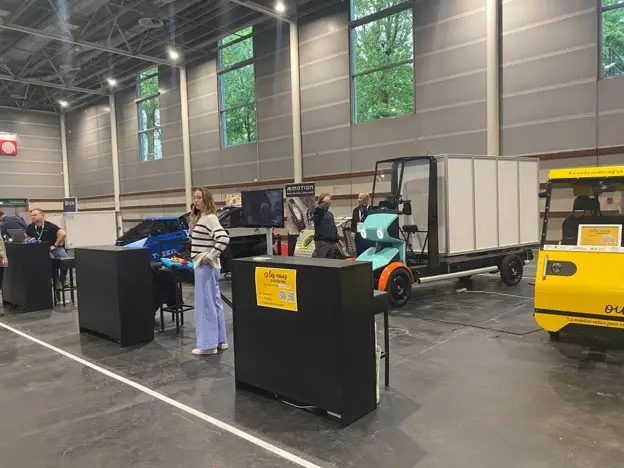 The visit was designed to provide Sustainability Management students with direct exposure to the rapidly evolving world of sustainable mobility and environmental innovation. Hosted at Paris Expo Porte de Versailles, the Drive to Zero exhibition brings together public institutions, technology companies, startups, transport operators, and infrastructure providers focused on reducing emissions and supporting the transition toward a low-carbon future.
For students studying sustainability, the event offered a valuable opportunity to see how concepts such as decarbonization, climate action, and sustainable mobility are implemented in practice.
Rather than simply observing new technologies, students were encouraged to critically evaluate the solutions presented and consider their environmental, social, and economic implications.
Exploring the Technologies Powering the Low-Carbon Transition
Throughout the exhibition, students interacted with representatives from companies working across electric mobility, charging infrastructure, digital systems, and energy management. Industry experts explained how they are creating long-term value with sustainability and how their organizations are addressing key challenges related to:
- Electric vehicle charging infrastructure
- Energy distribution and grid integration
- Smart mobility systems
- Charging network management
- Sustainable transportation technologies
The conversations provided valuable insight into how businesses position themselves within the growing sustainability sector while balancing innovation, efficiency, safety, and user experience.
The Growing Role of AI in Sustainable Mobility
One of the most interesting themes to emerge from the visit was the increasing role of artificial intelligence in sustainability and mobility management.
Students explored how AI-powered tools are being used to:
- Monitor charging station performance
- Predict fluctuations in energy demand
- Improve network reliability
- Optimize infrastructure usage
- Support more efficient energy management
These discussions highlighted the intersection between sustainability, technology, and data-driven decision-making, demonstrating how digital innovation is becoming an essential component of environmental solutions.
Learning from Industry and Public Sector Leaders
In addition to private companies, students also engaged with institutional stakeholders working to advance sustainable transportation through regulation and public policy. Representatives from the French Ministry of Transport shared insights into the policies, incentives, and regulatory frameworks designed to encourage the adoption of low-carbon mobility solutions.
These conversations helped students better understand the relationship between technological innovation and public policy, and the role governments play in accelerating environmental transitions. The international nature of the exhibition also exposed students to different approaches to sustainability challenges across Europe and beyond, offering a broader perspective on how countries and organizations are responding to climate and mobility concerns.
Supporting Sustainable Development Through Experiential Learning
The visit reflects Schiller's commitment to experiential learning and sustainability education by providing students with opportunities to engage directly with contemporary environmental challenges. Experiences like Drive to Zero allow students to connect theory with practice while developing the analytical skills needed to assess emerging technologies and sustainability strategies critically.
The visit also aligns closely with the university's support for the United Nations Sustainable Development Goals, particularly SDG 9 (Industry, Innovation and Infrastructure), SDG 11 (Sustainable Cities and Communities), and SDG 13 (Climate Action).
By exploring real-world examples of innovation and decarbonization, students gained valuable insight into the opportunities and challenges involved in building more sustainable and resilient societies.
Preparing Future Sustainability Leaders
As organizations and governments around the world continue investing in climate solutions and sustainable infrastructure, understanding how these systems operate in practice is becoming increasingly important. The Drive to Zero visit provided students with a unique opportunity to engage with professionals working at the forefront of environmental innovation while gaining a deeper understanding of the technologies, policies, and partnerships shaping the future of sustainable mobility.