What role can diplomacy play in preventing conflict, and how is that role changing as economic interests, technology and artificial intelligence increasingly shape international relations?
Schiller International University’s Distance Learning community explored these questions during “Diplomacy as a Tool for Peace and War Prevention in Time of Conflicts,” a student-led panel designed to connect academic concepts with the perspectives of professionals working across diplomacy, international development, human rights, economics and geopolitical affairs.
Organized by the Distance Learning Student Government, the session was particularly relevant to students from International Relations and Diplomacy and International Business. The conversation went beyond traditional state-to-state diplomacy to consider how business, shared economic interests, multilateralism, technology and human relationships can contribute to cooperation and conflict prevention.
Key Takeaways
- Diplomacy Requires Good Faith: Effective negotiations depend not only on formal processes, but also on a genuine willingness to work towards resolving conflict.
- Common Interests Can Support Cooperation: Economic interests can provide common ground and help move collaboration forward.
- AI Can Support, Not Replace, Diplomacy: Technology can accelerate processes, but human connection and oversight remain essential.
- Multilateralism Remains Important: International cooperation and continued dialogue are crucial when addressing complex global challenges.
- Continuous Learning Matters: Students were encouraged to remain curious and continually develop their understanding as they prepare for careers in international fields.
Bringing Different Perspectives to Modern Diplomacy
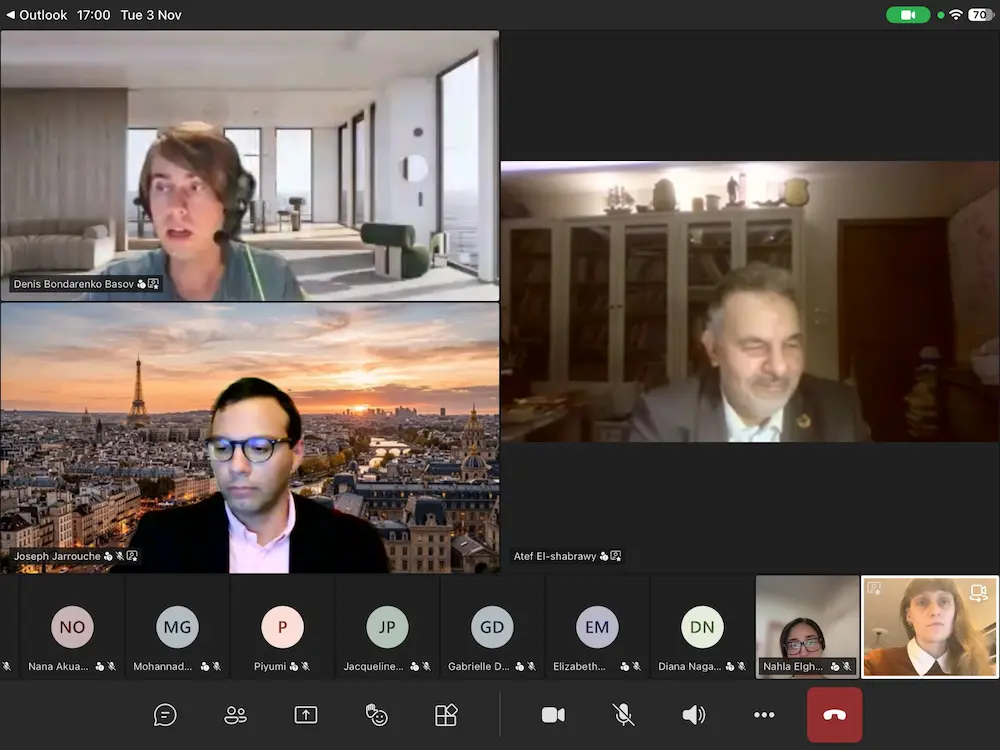 The panel brought together three speakers whose expertise reflected the increasingly interdisciplinary nature of diplomacy, allowing students to explore conflict prevention through the lenses of economic development, human rights, geopolitical strategy and international cooperation.
Dr. Atef Elshabrawy brought an economic development and strategic planning perspective to the conversation. Drawing on 28 years of experience working with international development agencies, governments and financial institutions across approximately 23 countries, including experience with the World Bank and across the Middle East and North Africa, he explored how shared economic interests can create common ground between countries and support cooperation.
Dr. Leah Rea contributed a human rights, international law and multilateralism perspective. Her work in international human rights and constitutional law, together with her involvement in research connected to the OSCE, informed a discussion about the importance of international cooperation, human relationships and oversight, particularly as new technologies such as artificial intelligence become increasingly present in diplomatic processes.
Mr. Joseph Jarrouche brought the perspective of geopolitical strategy, investment and cross-border institutional relations. Through his work as Managing Partner at Agrippa & Company and as Founder and President of Cercle France-Liban, he works at the intersection of geopolitical risk, economic cooperation and international dialogue. This experience provided a practical lens for considering how relationships, economic interests and good-faith negotiations can contribute to conflict prevention.
Together, their expertise demonstrated that modern diplomacy extends well beyond traditional state-to-state relations. For students, the discussion showed how economics, law, business, technology, human rights and geopolitical strategy increasingly intersect in efforts to build cooperation and prevent conflict.
From Common Interests to Good-Faith Negotiations
One of the central ideas explored during the panel was the importance of identifying common interests as a foundation for cooperation.
Dr. Elshabrawy discussed a “diplomacy of common interest,” considering how shared economic interests can encourage countries and institutions to move towards cooperation. The conversation also examined questions around economic development and existing systems used to assess investment conditions.
Mr. Jarrouche approached conflict and international relations from another perspective, emphasizing the mindset parties bring to negotiations. His comments highlighted the importance of approaching negotiations in good faith and with a genuine objective of reaching an end to conflict.
For students, these perspectives offered a practical complement to the frameworks and theories they encounter academically, demonstrating how diplomacy depends not only on institutions and formal mechanisms but also on incentives, relationships and the behavior of those involved.
Can Artificial Intelligence Replace the Human Side of Diplomacy?
The role of artificial intelligence in diplomacy provided another important dimension to the conversation.
Rather than presenting AI as a replacement for diplomatic professionals, Dr. Rea emphasized the continuing importance of human connection. AI can help accelerate certain bureaucratic and administrative processes, but relationship-building, judgment and human oversight remain central to the diplomatic process.
The discussion offered students a timely opportunity to consider where technology can complement diplomatic work and where the human element remains difficult to replace.
Students also heard about the continuing importance of multilateralism, environmental diplomacy and continuous learning, demonstrating how increasingly interconnected challenges require professionals who can work across disciplines and adapt to changing international environments.
Learning from the People Behind the Practice
A central objective of the panel was to give students access to something textbooks cannot always provide: the practical perspectives of people with direct experience in these fields.
This approach also complements the professional exposure embedded in Schiller’s Master of Arts in International Relations and Diplomacy through its partnership with UNITAR. The collaboration brings UNITAR experts into selected courses and provides access to mentoring and career-development opportunities connected to international organizations, helping students connect academic preparation with the realities of working in international affairs.
Students described the session as “very informative and thought-provoking” and thanked the speakers for an “insightful session.”
The event also reflected Schiller’s broader commitment to experiential and student-led learning. Although the panel was particularly aligned with International Relations and Diplomacy and International Business, its discussion showed why challenges such as conflict prevention increasingly require perspectives from law, economics, business, technology and international affairs.
The session marked the final activity organized by the Distance Learning Student Government during the 2025–2026 academic year under the presidency of Denis Bondarenko Basov. It provided a fitting conclusion to the year: an initiative developed by students that created an opportunity for their peers to move beyond theory, ask questions directly to experienced professionals and engage with the evolving realities of international diplomacy.
 Request information