 Request information

Global Innovation Challenge 2026 Brings Students and the City of Heidelberg Together to Rethink the International Student Experience
The 5th edition of the Global Innovation Challenge has concluded, bringing together students from across Schiller International University and the City of Heidelberg in a collaborative initiative focused on civic innovation, urban development, and the future of the Heidelberg international student experience. Over six weeks, students worked in multidisciplinary student teams to develop practical, scalable solutions aimed at improving how international students experience city life, integration, and public services while studying in Heidelberg.
This edition marked a milestone for the Global Innovation Challenge, as it was the first developed in direct collaboration with a public institution.
Key Takeaways
- The Global Innovation Challenge 2026 brought together 39 students from 26 nationalities across all Schiller campuses.
- Students developed AI-powered student solutions focused on civic engagement, student integration, and digital accessibility in Heidelberg.
- The challenge combined cross-campus collaboration, mentorship, and real-world learning in partnership with the Office of the Deputy Mayor of Heidelberg.
A Global and Multidisciplinary Learning Experience
This year’s student innovation challenge brought together students from a wide range of academic programs, including:
- BS International Business
- BS Computer Science
- BA International Relations and Diplomacy
- MBA International Business
- MS Data Science
- MS Digital Marketing and E-commerce
Participants represented 26 nationalities, reinforcing the international and collaborative nature of the initiative. Students worked in cross-campus teams supported by mentors who guided the process from ideation to final presentation.
The challenge also reflected Schiller’s commitment to sustainable development goals education, particularly SDG 5 gender equality, with women representing 56% of participants.
Civic Innovation and AI-Powered Student Solutions
Titled “Connecting Students and the City: Heidelberg’s International Experience Challenge,” the initiative focused on how cities can become more accessible, inclusive, and engaging for international students in Germany.
Throughout the program, teams explored topics including:
- Civic engagement platforms
- Student integration tools
- Administrative and visa support systems
- Housing and student services
- Digital solutions for city engagement
Students were encouraged to incorporate AI tools into the ideation and prototyping process, resulting in a range of AI-powered student solutions and MVP-level concepts developed within a limited timeframe.
Among the final proposals were:
- A virtual passport encouraging engagement with the city
- A unified platform for housing and student services
- Enhanced digital support for visa and bureaucratic processes
- Civic engagement systems connecting students, universities, and local businesses
The challenge created a strong example of international education innovation, combining technology, urban governance, and the realities of Heidelberg student life.
Real-World Collaboration with the City of Heidelberg
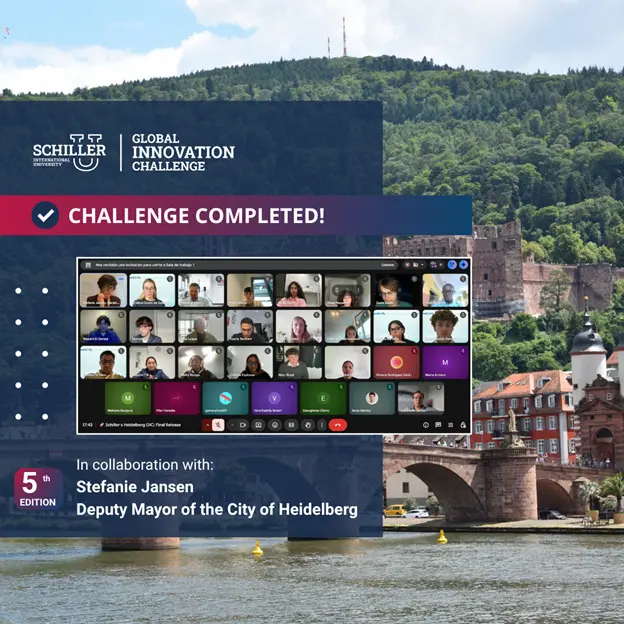 A defining aspect of the challenge was the direct collaboration with Stefanie Jansen, Deputy Mayor of Heidelberg. During the final presentations, she highlighted the creativity and engagement demonstrated by students: She also emphasized the importance of cities becoming more accessible and responsive to international communities:
“We as cities should find solutions to be more accessible for you as international students.”
Her remarks reinforced the relevance of the students’ proposals and the growing importance of collaboration between municipalities and higher education institutions.
Innovation Challenge Winners Recognized for System-Level Thinking
The winning team was recognized for its system-oriented approach to improving the international student journey. Their proposal focused on creating a connected ecosystem supporting students from arrival through long-term engagement, including:
- Arrival and onboarding support
- Student ambassador networks
- Long-term community and legacy initiatives
The team stood out for its ability to connect multiple touchpoints into a cohesive framework focused on belonging, accessibility, and engagement. As part of their recognition, the innovation challenge winners will have the opportunity to continue exploring their ideas alongside the Office of the Deputy Mayor of Heidelberg.
Mentorship, Collaboration, and Career Readiness
Mentors played a key role throughout the challenge, supporting students as they transformed ideas into practical solutions with social and institutional relevance. The initiative provided students with valuable experiential learning opportunities connected to:
- Problem-solving and innovation
- Team collaboration across time zones and disciplines
- Public-sector and institutional engagement
- Leadership and communication skills
These experiences contribute directly to student employability skills and broader career readiness programs, preparing students to operate in international, multidisciplinary, and innovation-focused environments. As Carmen Gómez, Chief Communications Officer responsible for Employability, noted:
“This challenge has been a unique opportunity for our students to develop their professional skills in a truly diplomatic and public-sector environment.”
Strengthening Global Student Collaboration Through Innovation
The Global Innovation Challenge 2026 highlighted how global student collaboration, civic innovation, and applied learning can come together to address real-world urban challenges. By connecting students with public institutions and encouraging innovation and entrepreneurship through practical problem-solving, the initiative reinforced Schiller’s commitment to preparing students for global careers shaped by creativity, adaptability, and collaboration.
Through initiatives like this, students gain not only academic knowledge, but also the opportunity to actively contribute to conversations shaping the future of cities and international education.