 Request information

Why Tampa is a Rising Star for International Business Students
When international students think about studying business in the US, cities like New York, Los Angeles and Boston usually come first to mind. These locations offer prestige and visibility, but they also come with high tuition costs, expensive housing, and intense competition for internships.
Increasingly, students are looking beyond traditional study destinations. They want places where education connects directly to career outcomes, living costs remain manageable, and industry access is growing rather than saturated.
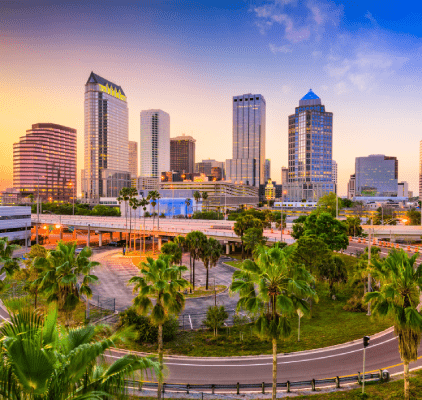
Tampa, a city on Florida’s Gulf Coast, is quickly emerging as one of the smartest places to study international business right now. Ranked the top US city for foreign business investment in the Financial Times–Nikkei Investing in America 2025 report, the city stands out for its workforce strength, business climate and quality of life. As of 2026, continued growth across finance, logistics, healthcare management, and technology is reinforcing Tampa’s reputation as one of the most promising emerging business cities in the country.
If you want to pursue a career in international business in the US, Tampa offers you the opportunity to study in a place where global companies are expanding, internships are becoming more accessible, and your classroom learning connects directly with a changing international economy.
A Growing Global Business Hub in Florida
Tampa’s business growth is not a coincidence. It reflects a decade of steady investment, international company expansion, and workforce development that is reshaping the city’s global profile. Today, the Tampa metro area supports roughly 22,000 businesses, with continued growth across finance, logistics, healthcare management, and technology.
What makes Tampa, Florida, the best state to study in the US is how the city is attracting overseas investment. In the Financial Times–Nikkei Investing in America 2025 ranking, Tampa placed No. 1 out of 91 US cities evaluated for foreign business activity across multiple indicators, including:
- Workforce and talent
- Openness and diversity
- Business environment
- Infrastructure for foreign companies
- Quality of life
- Investment trends
- Trade resilience
The rankings indicate where companies are expanding operations at present. For example, if you wish to study an MBA in Tampa, you will be based in a city where multinational companies are expanding. Instead of waiting until graduation to enter the global business environment, you will already be learning within one.
A Strategic Gateway to International Markets
Where you study international business is directly correlated to who you meet, which industries you see up close and how quickly you master the art of navigating global markets. Tampa places you inside one of the most active commercial corridors connecting the US with Latin America, the Caribbean, and the southeastern US distribution network. What makes Tampa especially relevant for international business students is its close connection to real trade activity across the Americas. This is reflected in several key advantages, namely:
- A major logistics gateway: Port Tampa Bay moves more than 37 million tons of cargo each year and is the closest deep-water US port to the Panama Canal, supporting regional supply chains across North and Latin America.
- Access to a large regional market: Companies based here can reach 33 million consumers within an eight-hour drive, which continues to attract operations and distribution teams to the area.
- A strong international employer presence: Nearly 500 foreign-owned companies from over 40 countries operate across Tampa Bay.
- Global business connectivity: Tampa International Airport, ranked number one among large US airports by J.D. Power for two consecutive years, is expanding to support the expected growth in international travel.
For international business students, this creates a practical learning environment shaped by real global movements.
More Affordable Than Traditional US Study Destinations
Where you study affects more than your classroom experiences. It determines how comfortably you can live, how confidently you can plan the next few years, and how much time you can invest in building a professional experience while abroad. The cost of living in Tampa remains noticeably lower than in prime US cities, where average rents are often two to three times higher than in the Tampa Bay area. For you as an international student, that difference creates practical advantages throughout your degree program, including:
- Manageable housing costs: Lower average rents make it easier to plan financially for multiple years of study without adjusting your budget each semester.
- Flexibility for internships and events: Balanced living expenses make it more realistic to gain experience alongside your classes instead of postponing it until after graduation.
- Everyday expenses that stay predictable: Transport, groceries, and essential services typically cost less than in major coastal business cities, helping you manage your monthly budget more confidently.
- More time for career preparation: With less financial pressure shaping your decisions, you can stay focused on building skills, connections, and direction during your degree.
For many international students, this balance is what makes Tampa feel practical, and not merely attractive. Pursuing an international business degree in 2026 in the city will allow you to focus on building experience while studying, not just managing costs.
Growing Career Opportunities for International Business Students
If you want to discover career opportunities after studying international business in Tampa, the local job market is the first place to research. The city’s recent workforce expansion shows companies are adding roles across functions that international business students often enter first. In the past year alone, the region added 12,700 private-sector jobs, representing nearly 15% of Florida’s total job growth. For you, that means more job opportunities appearing while you are still studying, not just after graduation.
- Internships connected to expanding sectors: Finance, logistics, healthcare administration, and business services continue adding roles that support international operations.
- Employer demand supported by new business formation: A 71% increase in new business applications signals steady hiring across coordination, analytics, and operational support roles.
- Networking opportunities across the regional business community: Industry events, partnerships, and innovation districts make it easier to meet employers working across trade and corporate services.
- Career pathways shaped by a strengthening labor market: Rising employment levels across Tampa reflect continued expansion in teams supporting both domestic and international business activity.
This kind of environment makes it easier to test career directions early and graduate with experience that already reflects how companies operate across markets.
A Booming Economy and a Multicultural Learning Environment
Florida’s economic boom will directly enhance the daily experience of your degree, connecting you to a dynamic business environment. This surge in the local economy is occurring alongside population growth, international investment, and rising workforce participation, all of which contribute to an enriched environment for your studies. Recent city data shows employment rates increasing by two percent. In comparison, unemployment declined by two percent. Both academic learning and global workplace readiness benefit from this momentum:
- Industries aligned with international business careers: Finance, trade logistics, healthcare operations and technology services continue to expand across Tampa’s regional economy.
- A workforce influenced by international investment: Global companies choosing Tampa contribute to teams that operate across borders, markets and time zones.
- A multicultural classroom for global careers: You study alongside classmates from different countries while living in a city shaped by international relocation and employer mobility.
- An emerging business center still attracting new operations: Rising employment levels and sustained company formation show Tampa is still building capacity rather than competing within a fixed job market.
You gain exposure to how international business operates in a city that is still growing in its global role.
Study International Business in Tampa at Schiller
Choosing where to study abroad is also about choosing the kind of learning environment that supports your long-term direction. At Schiller International University’s Tampa campus, your experience is shaped by an international classroom and a curriculum designed around cross-border business practices.
Our programs, such as the BSc in International Business and the MBA in International Business, are structured to help you understand how organizations operate across markets, manage global teams, and respond to changing economic conditions while studying in a city where international investment continues to grow.
Living and studying in Tampa also gives you access to a professional setting that is easier to navigate as a student than to larger US business hubs. You can build routines, explore the region and engage with local industry without the pressure of higher-cost cities, which makes it more realistic to stay focused on developing skills throughout your program.
Together, this combination of academic structure, international perspective and location allows you to shape your degree around the kind of global career you want to build after graduation.
FAQs
Q1. Is Tampa a good city for international business students?
Yes. If you are planning to study international business in the United States, Tampa offers a strong mix of employer growth, international investment activity, and a lower cost of living than many traditional study destinations.
Q2. What are the benefits of studying business in Tampa, Florida?
Studying in Tampa gives you access to expanding industries, internship pathways linked to regional employers and a multicultural learning environment shaped by global companies operating across the area. You also benefit from a city that is still growing, rather than saturated with graduates entering the same job market.
Q3. How much does it cost to live in Tampa as an international student?
Compared to cities like New York or Boston, your housing and everyday expenses in Tampa are typically more manageable. It makes it easier for you to plan your budget.
Q4. Are there internship opportunities for international students in Tampa?
Yes. Tampa’s expanding sectors, including logistics, healthcare systems, and finance and business services, continue creating internship opportunities you can explore while studying.
Q5. What career opportunities are available after studying business in Tampa?
After completing your degree, you can pursue roles in areas such as trade coordination, business analytics, consulting support, logistics operations, and financial services.
Discover Our Campuses