 Request information

Why an American Bachelor in Europe Could Be the Perfect Choice for Your Child
An American bachelor's degree in Europe is gaining serious traction among families who want more than a conventional college path. With tuition rates climbing in the United States and competition for spots at top schools getting tighter every year, parents and students are looking beyond traditional borders.
Europe offers a mix of academic rigor, cultural depth, and financial relief that's hard to match. And when you layer an American-style curriculum on top of that? You get a degree recognized around the world, earned in cities where history, politics, and commerce happen right outside your classroom window.
Key Takeaways
- An American bachelor’s degree in Europe combines US-style academic flexibility with European affordability and cultural richness.
- Students gain global career readiness and cross-cultural learning experience by studying in cities like Madrid, Paris, or Heidelberg.
- English-taught bachelor programs in Europe let teens earn a recognized degree without needing to learn a new language first.
- Families can save significantly on tuition compared to most US institutions while giving their child international student mobility.
- Graduates leave with global employability skills, professional networks, and real-world exposure that sets them apart in the job market.
What Is an American Bachelor's Degree in Europe, and Why Does It Matter?
When people hear about an American degree in Europe, they often picture a study abroad semester. But this is something different. Several universities across Europe offer full four-year bachelor's programs that follow American educational standards, taught entirely in English. These undergraduate programs in Europe use the same credit-hour system, GPA grading, and liberal arts framework as schools in the US. The difference is where you live while earning that degree: think cobblestone streets, weekend trips to neighboring countries, and classmates from dozens of nationalities.
This model appeals to families who value the structure and recognition of a US degree in Europe but want their child to grow through an international student experience in Europe. It's not about choosing between two worlds. It's about combining the best parts of both.
How Studying in Europe Beats the Traditional Path for Teens
The cost of a four-year degree in the United States now averages over $100,000 at public universities and significantly more at private ones. For many parents, that number alone is enough to begin exploring alternatives. Affordable study abroad in Europe is no longer a niche idea. According to multiple education reports, tuition at American universities in European campuses can be 30 to 50% lower than comparable US institutions, depending on the program and location.
Cost, however, is only part of the story. Study abroad in Europe for teens offers something that no domestic campus can replicate: daily immersion in a foreign culture. Students learn to navigate new systems, communicate across language barriers, and adapt to different social norms. These soft skills development experiences shape who they become as professionals and people.
US Education versus European Education versus American Degree in Europe
|
Feature |
Traditional US College |
European University |
American Degree in Europe |
|
Curriculum Style |
Liberal arts, flexible majors |
Specialized from year one |
US-style flexibility in European setting |
|
Language of Instruction |
English |
Local language (often) |
English |
|
Average Annual Tuition |
$20,000 - $60,000+ |
$1,000 - $15,000 |
$8,000 - $20,000 |
|
Cultural Exposure |
Domestic focus |
Regional focus |
Global, multicultural campus |
|
Career Network |
US-centric |
Country-specific |
International, multi-country |
The Real Benefits of an International Bachelor’s Degree for Your Child
1. Global Career Readiness Starts on Day One
When students attend international bachelor programs in Europe, they aren't just sitting in lectures. They are building networking opportunities with peers from 40, 50, sometimes 80 or more nationalities. Recruiters increasingly value candidates who can work across cultures, and a multicultural campus environment is the best training ground for that skill.
2. English-Taught Programs Remove the Language Barrier
One of the biggest concerns parents have about international education for teens in Europe is language. The good news? Hundreds of programs now operate fully in English. Your child can study in Germany, Spain, and France while attending classes entirely in English, with the added bonus of picking up a second (or third) language through daily interaction.
3. Affordability Without Compromising Quality
Families exploring global education opportunities often discover that European campuses offer world-class facilities and faculty at a fraction of what they would pay stateside. That means less student debt and more freedom to invest in experiences, travel, or postgraduate education.
4. Real-World Career Outcomes
Graduates who complete career opportunities after studying abroad report stronger job placement rates in international organizations, multinational companies, and global non-governmental organizations (NGOs). The combination of an American credential and European living experience makes a resume stand out in nearly any field.
What Student Life in Europe Actually Looks Like
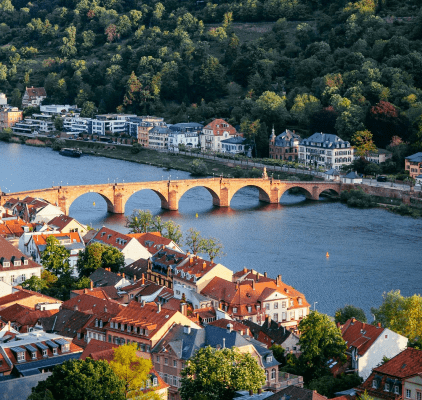
Forget the postcard version. Student life in Europe involves weekend markets in Madrid, museum passes in Paris, and semester breaks spent traveling by train through the Alps. Students studying on campuses in cities like Heidelberg join local clubs, volunteer with community organizations, and build friendships that span continents. The study abroad benefits for teenagers go beyond academics. This is where teens grow into globally aware adults.
Parents often worry about safety and support. Most American universities in Europe offer dedicated student services, housing assistance, and orientation programs designed specifically for international student mobility. Your child won't be on their own. They'll be part of a structured, supportive community from day one.
Your Child's Global Future Starts with the Right Degree
An American bachelor's degree in Europe isn't just an alternative to a traditional college path. For many families, it's the smarter choice. Lower costs, global exposure, cross-cultural learning experience, and a degree recognized worldwide make this option hard to ignore.
Schiller International University offers exactly this kind of education. With campuses in Madrid, Paris, and Heidelberg, Schiller lets students earn an American degree while living and learning across Europe. Programs include the BA in International Relations and Diplomacy, BS in International Business, BS in International Hospitality and Tourism Management, BS in International Marketing, BS in Computer Science, and BS in Business Analytics.
Whether your teen is drawn to diplomacy, technology, or business, Schiller's global education opportunities set them up for a career without borders.
FAQs
Q1: What is an American bachelor's degree in Europe?
It's a full undergraduate degree that follows the American higher education model, including credit hours, GPA grading, and a liberal arts approach, but is delivered on a campus located in a European city. Students get a US-recognized qualification while living abroad.
Q2: Is an American degree earned in Europe globally recognized?
Yes. When the institution holds recognized educational standards, the degree carries the same weight as one earned in the United States. Employers and graduate schools around the world accept these qualifications.
Q3: How is studying for an American bachelor’s in Europe different from studying in the US?
The academic framework is similar, but the environment is different. Students take classes in English, follow an American curriculum, and earn the same type of degree. The difference is they do it while surrounded by a multicultural campus environment in cities like Madrid, Paris, or Heidelberg, gaining daily exposure to new cultures and perspectives.
Q4: Are there affordable American-style universities in Europe for international students?
Absolutely. Tuition at many American university in Europe campuses is significantly lower than at comparable US colleges. When you factor in lower living costs in many European cities, families can save meaningfully over a four-year degree.
Q5: What career opportunities are available after completing an American bachelor's in Europe?
Graduates often move into roles at international organizations, global companies, and NGOs. The combination of an American credential and years of living in Europe gives them a strong edge in fields like business, diplomacy, marketing, and technology.
Discover Our Campuses