 Request information

From Heidelberg to Global Education Strategy: Mireia Martín Fernández’s International Journey
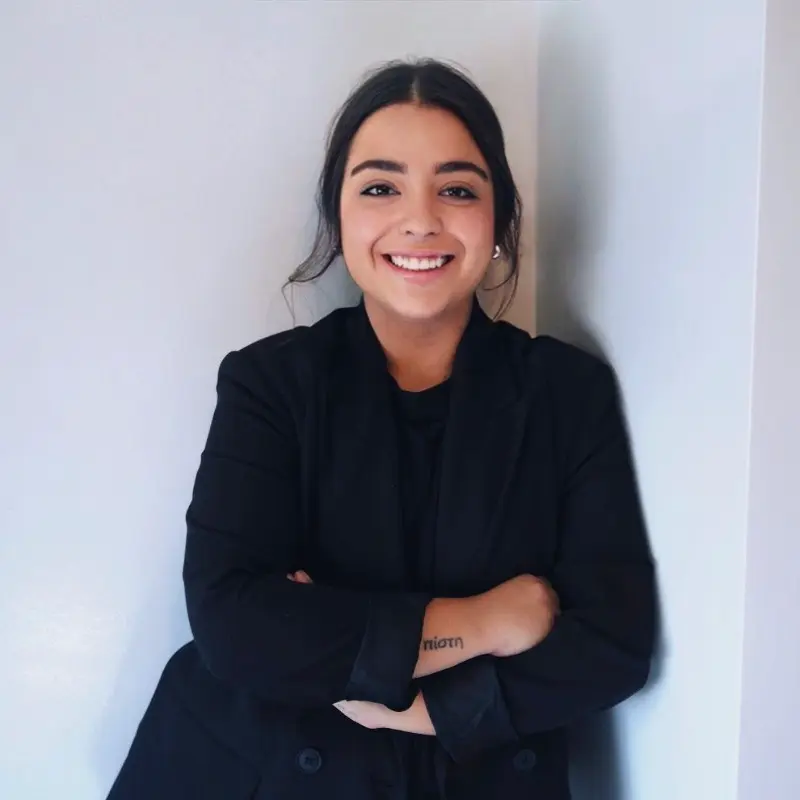
Schiller Alumni Spotlight: Mireia Martín Fernández
From graduating from Schiller in 2022 with a degree in International Business at Schiller’s Heidelberg campus to building a career across Europe, the United States, Latin America, and India, Mireia Martín Fernández has shaped her journey through curiosity, adaptability, and an international mindset. Now based in Madrid, she works as an International Education Strategy and Market Development Consultant, combining her global experience with a passion for creating educational opportunities for others.
Her time at Schiller, both in Heidelberg and through Distance Learning, helped her develop the independence, cross-cultural skills, and global perspective that have guided her career. Since then, her path has taken her from becoming an Interim HR Director at 25 to launching her own consulting business and exploring the international education market in India.
Today, Mireia contributes to a project with Fundación Amancio Ortega helping young people in Spain access opportunities to study abroad. In this Alumni Spotlight, she reflects on international education, lifelong learning, and the importance of embracing unexpected opportunities.
Key Takeaways
- How studying in Heidelberg and through Distance Learning strengthened Mireia’s adaptability, independence, and international mindset.
- What taking on senior HR responsibilities at 25 taught her about leadership, accountability, and trust.
- How launching her own consulting business and working internationally shaped her entrepreneurial and cross-cultural perspective.
- Her advice to students and recent graduates on embracing uncertainty, learning from mistakes, and staying true to themselves.
Why did you choose Schiller International University?
 I chose Schiller International University for several reasons. First, I was drawn to the opportunity to live and study in different countries through the campus rotation system, while still feeling part of one international community.
I also loved the idea of being surrounded by people from all over the world, building friendships across cultures, and learning from perspectives very different from my own.
Another important factor was the American education system, which I felt was a much better fit for my personality and way of thinking. Compared to the more traditional Spanish system, it offered a more practical, interactive approach that valued different types of intelligence, encouraged critical thinking, and allowed students to explore ideas beyond conventional boundaries.
As someone who naturally enjoys thinking outside the box, being curious, and approaching challenges from different angles, I felt that Schiller offered an environment where I could truly thrive, both personally and academically. Ultimately, I chose Schiller because it represented the kind of education and international experience I was looking for: one that would broaden my perspective, challenge me to grow, and prepare me for a global career.
You studied in Heidelberg and also experienced Distance Learning. How did these different ways of learning shape your university experience and your ability to adapt to different environments?
Studying in Heidelberg felt like home to me. I wouldn’t romanticize the idea that living abroad is always easy, because it comes with challenges, but I truly believe that living in another country helps you grow in ways that are very different from staying in a familiar environment. It pushes you out of your comfort zone, makes you more independent, and teaches you to adapt to different people, cultures, and ways of thinking.
Living on campus was also a very special part of my experience. My friends gradually became my family, and that sense of belonging made the whole university experience much more meaningful. Learning didn't happen only in the classroom; it happened in everyday conversations, shared experiences, and the simple fact that you were constantly surrounded by people with different backgrounds and perspectives. That made studying feel much more dynamic, and I genuinely enjoyed every part of it.
Distance Learning gave me a different kind of flexibility, as it allowed me to combine my studies with work and gain professional experience while continuing my education. It taught me to manage my time effectively, stay organized, and take responsibility for my own learning. Balancing both required discipline, but it also helped me connect what I was learning academically with real-world professional situations.
Ultimately, both experiences shaped me in different ways: Heidelberg taught me the value of community and belonging, while Distance Learning gave me the flexibility to grow professionally alongside my studies. Together, they reinforced one of the things I value most about an international education: the ability to adapt to different environments, make the most of every opportunity, and keep growing both personally and professionally.
What skills or lessons gained from the BS International Business you studied have been most valuable in your professional life?
One of the most valuable lessons I gained from my BS in International Business was learning how to work effectively in diverse, multicultural teams. Studying alongside people from different countries and backgrounds taught me that what feels completely normal to me, based on my own culture and experiences, might be very different for someone else. I learned to be open-minded, question my own assumptions, listen to different perspectives, and find common ground. This has made me much more flexible and adaptable in my professional life, allowing me to work comfortably with international teams and stakeholders across different cultures.
Another skill that has been particularly valuable is communication. The degree involved a lot of presentations, group projects, and opportunities to share and defend our ideas. Over time, this helped me become more confident speaking in public, structuring my thoughts, expressing my opinions, and communicating with different audiences. Today, these skills are essential in my work, whether I am presenting a proposal, building relationships with stakeholders, or bringing people together around a shared objective.
Finally, I learned to approach problems from a broader, more global perspective. International Business encouraged me to understand how different markets, cultures, and business practices interact, rather than looking at challenges from just one point of view. Combined with the practical nature of the degree, this taught me to think critically, be resourceful, and look for solutions beyond the obvious.
Looking back, I would say the greatest value of my degree was not just the business knowledge itself, but the mindset it gave me: being curious, adaptable, comfortable with different perspectives, and confident enough to contribute my own ideas. Those qualities have been fundamental throughout my professional journey.
Shortly after graduating, you became an Interim HR Director at just 25. What was it like to take on that level of responsibility so early in your career, and what did you learn from the experience?
If I said that taking on that level of responsibility at 25 didn’t intimidate me, I would be lying! The workload was demanding, but what I found most challenging was the decision-making: understanding the impact my decisions could have on people, the business, and the organization as a whole. It was a challenge on every level, both professionally and personally.
One of the biggest changes was moving from having a level of supervision to suddenly reporting directly to the CEO. That shift brought a completely new level of exposure, accountability, and visibility. I had to learn to trust my own judgment, communicate with senior leadership, defend my decisions, and navigate situations where there wasn't always someone above me to provide an answer. It gave me a whole new set of skills and helped me discover strengths and facets of myself that I hadn't even realized I had.
However, I quickly realized that I could either focus on how challenging it was or see it as an incredible opportunity to learn, and I chose the latter. I was exposed to situations that I might otherwise have taken years to experience, from managing priorities and navigating complex people-related issues to supporting leadership decisions and balancing employees’ needs with business objectives.
I also made mistakes, and I think that was one of the most valuable parts of the experience. It taught me to take accountability, ask better questions, listen before making decisions, and understand that being a good leader doesn’t mean having all the answers. It means having the judgment to make the best decision you can with the information available, the humility to recognize when you get something wrong, and the willingness to learn and adapt.
The experience accelerated my professional maturity enormously. It strengthened my confidence, resilience, and ability to deal with uncertainty, but it also taught me that leadership is not simply about having authority; it is about building trust, communicating clearly, and understanding the human impact of business decisions.
Looking back, I am incredibly grateful for that opportunity. It pushed me far beyond my comfort zone, helped me develop my own professional judgment much faster, and revealed capabilities I might not have discovered otherwise.
Sometimes, being given responsibility before you feel completely ready is precisely what helps you discover what you are capable of.
You later moved to the United States to pursue your MBA and created your own LLC consulting company. What inspired you to build something of your own, and what did entrepreneurship teach you?
I have always had an entrepreneurial spirit. Beyond the idea of working for myself, I have always been fascinated by the process of creating something from scratch, giving it shape, and turning an idea into something tangible. Moving to the United States to pursue my MBA was an opportunity to explore that side of myself by building MM Essence, my own consulting business focused on leadership, wellbeing, and people and culture.
One of the most rewarding outcomes was taking the idea from concept to execution. I developed the brand, built the website, defined the services, and shaped a clear value proposition around helping individuals grow as leaders while supporting organizations in creating healthier, more effective workplace cultures.
I translated my background in HR, leadership, and coaching into a portfolio of services, including leadership and executive coaching, student mentoring, organizational culture consulting, and workshops on communication, resilience, emotional intelligence, and cross-cultural collaboration. This required me to think not only about the services themselves, but also about the needs of different audiences and how to communicate the value of what I could offer.
I particularly enjoyed the creative side of building the business, but also the challenge of connecting that vision to practical solutions. I wanted MM Essence to bring together the human side of leadership and the business side of organizational performance, helping people develop while enabling organizations to strengthen engagement, trust, and collaboration.
That said, I don't want to romanticize entrepreneurship. There were difficult moments, uncertainty, frustration, and many questions I didn't always know how to answer. Building a business means taking responsibility for every aspect of it, learning to prioritize, making decisions without having all the information, and continuously adapting your approach.
Although entrepreneurship hasn't necessarily been a permanent path for me, at least for now, I consider it an incredibly valuable chapter. I went beyond simply having an idea: I created a brand, established its digital presence, structured a portfolio of services, and developed a business concept that brought together my professional experience and personal values.
Above all, it taught me that building something of your own requires creativity, resilience, and the willingness to turn ideas into action. It also gave me a deeper understanding of the challenges entrepreneurs face and strengthened my ability to approach problems with both a strategic mindset and a people-centered perspective.
After working in the United States, you moved to India to better understand the Indian market firsthand. What motivated you to take that step, and how did the experience broaden your perspective both professionally and personally?
Moving to India was a very intentional decision. I wanted to go beyond understanding an international market from a distance and experience it firsthand. I believe that if you really want to understand a country, its people, and its opportunities, you need to immerse yourself in its environment, observe how things work, and be willing to challenge your own assumptions.
Professionally, my goal was to understand the Indian international education market and identify opportunities for European universities looking to expand their presence there. I conducted in-depth market research, met with universities, international schools, education consultants, and other stakeholders, and explored student mobility trends, the competitive landscape, and the potential demand for Spain as a study destination. I also identified opportunities across student recruitment, institutional partnerships, executive education, corporate training, and other forms of international collaboration, developing strategic recommendations to support market entry and long-term growth.
What made the experience particularly valuable was realizing that understanding a market goes far beyond analyzing data. I had to rethink how I built relationships, communicated, and approached professional interactions. The way people establish trust, make decisions, and develop business relationships was very different from what I was used to. I had to let go of some of my preconceived ideas, become more observant, and learn to adapt without assuming that my own way of doing things was the right one.
I also spent a lot of time understanding the education ecosystem, particularly the role of families in students' decisions. I learned how important it was to understand not only the student's aspirations, but also the family's expectations, concerns, and long-term vision. That gave me a much more nuanced understanding of international student recruitment and the factors that influence educational choices.
On a personal level, India was an extraordinary experience of growth and open-mindedness. The cultural differences sometimes came as a real shock, but that was precisely where much of the learning happened. Living in an environment so different from my own made me question assumptions I hadn't even realized I had, discover new sides of myself, and become more comfortable with uncertainty and ambiguity.
Ultimately, India taught me that being international is not simply about having lived in different countries or speaking different languages. It is about being willing to listen, observe, question your own perspective, and adapt to people whose experiences and ways of seeing the world may be completely different from yours. Professionally, it strengthened my ability to analyze unfamiliar markets, build cross-cultural relationships, and identify opportunities in complex environments. Personally, it made me more curious, patient, and aware of how much there is to learn when you step outside your own frame of reference.
Having studied and worked across Europe, the United States and India, how has experiencing different cultures and business environments changed your understanding of what it means to be a global professional?
Living in nine different cities has taught me that adaptability is not just a skill you develop; it becomes part of how you see the world. Every move has challenged me to step outside what I know, understand different perspectives, and find my place in environments that often work very differently from one another. Across Europe, LATAM, the United States, and India, I’ve experienced diverse cultures and business environments that have shaped both my professional approach and the way I connect with people. My background in People and Culture, consulting, leadership, and international market research has taught me to combine a people-centred approach with a strategic business mindset. I’ve learned that
being a global professional is not simply about having international experience; it’s about understanding cultural nuances, challenging your own assumptions, and translating different perspectives into opportunities for collaboration and growth.
Ultimately, I see my international background as a competitive advantage: it allows me to connect people and ideas across cultures, build trust with diverse stakeholders, and approach challenges with both a global perspective and the flexibility to adapt to local realities.
Schiller is also about the people and connections you make along the way. Are there relationships you built at Schiller that have continued to support or influence you throughout your professional journey?
One of the things I value most about Schiller is that it brings together people from all over the world, but somehow makes that international environment feel like a community. Looking back, I realize that some of the most meaningful things I took away from my time there weren't just academic or professional; they were the relationships I built along the way. I’ve never really approached the relationships I built at Schiller as professional contacts. For me, they were genuine connections first, and that is what makes them so valuable today. I’m a very relationship-oriented person, and many of the friendships I made at Schiller have lasted well beyond our university years. We’re now spread across the world, but we still make an effort to stay connected through calls, reunions, and even trips to visit one another. These people have become important pillars in my life, both personally and professionally. They are people I care deeply about, but also people I admire for who they are and what they have achieved. Over the years, we’ve continued to learn from one another, share opportunities, and support each other through different stages of life and career. I think that is one of the most special things about Schiller: you don't just graduate with a degree or an international network; you build relationships with people who can remain part of your life for years to come. And while those connections have certainly influenced my professional journey, their value to me goes far beyond career opportunities. They are friendships I genuinely cherish.
Today, your work with Fundación Amancio Ortega focuses on helping young people in Spain access opportunities to study abroad. What does it mean to you to now help others experience the kind of international education and exposure that has been so important in your own journey?
One of the most exciting discoveries in my professional journey has been realizing how much I enjoy working in education, particularly from an international perspective. It brings together so many things I’m passionate about: people, different cultures, personal development, and creating opportunities for others to grow. It’s an area I’ve become increasingly drawn to, and one in which I can genuinely see myself developing further. What makes the Fundación Amancio Ortega project especially meaningful is the opportunity to help talented young people who might not otherwise have the resources to study abroad. It’s not just about giving them access to an academic opportunity; it’s about opening a door to a different world, exposing them to new cultures and perspectives, and helping them discover capabilities they might not even know they have. Having experienced first-hand how transformative international education can be, I understand that its impact goes far beyond the classroom. It can shape your confidence, independence, and the way you see the world. Over the past few years, I’ve also become much more conscious of the importance of having a positive impact on society through the projects I choose to be part of. Alignment with my values is now one of the first things I consider when evaluating an opportunity. Earlier in my career, I might have prioritized other factors more heavily, but today I want to be involved in projects that are not only professionally challenging, but also meaningful. For me, this project brings together my growing passion for international education and my desire to contribute to something that can genuinely change young people's lives. There is something very special about helping someone access an opportunity that could become a turning point in their story.
Learning seems to have been a constant throughout your journey. What has kept you motivated to continue studying, developing new skills, and challenging yourself even after completing your degree?
If you had told me during my school years that I would one day say I love studying, I probably wouldn’t have believed you! Schiller was actually the place where I discovered that what I truly love is not necessarily studying itself, but learning. I’ve always been a curious person, and my interests are quite diverse, so there is almost always something I’m exploring, reading about, or trying to understand. I enjoy developing the skills I already have, but I’m equally excited about discovering completely new areas and challenging myself to see things from a different perspective. I honestly believe that, throughout my life, I will never stop learning something, in one way or another. It might be a new language, a hobby, a short course, another master's degree, or perhaps even a completely different degree someday! It doesn't always have to be professionally oriented; sometimes, I simply want to learn something because it fascinates me or because it helps me grow as a person. Ultimately, what keeps me motivated is curiosity. I don't see learning as something that ends when you graduate, but as a lifelong process. I always want to keep exploring, challenging myself, and discovering new possibilities. I think staying curious and keeping an active mind is one of the best ways to continue growing, both personally and professionally.
Looking back on your journey so far, what advice would you give to students and young graduates about having the courage to take opportunities, keep learning, and build a path that is meaningful to them?
My biggest advice would be: don't be afraid. Don't be afraid to try new things, step outside your comfort zone, take opportunities that might seem intimidating, and, above all, make mistakes. Some of the experiences that have taught me the most were not necessarily the ones that went according to plan. I would also encourage them to keep an open mind. I used to be someone who planned everything, with a very clear idea of how I wanted things to unfold. Over time, I've learned that sometimes our own expectations can do us more harm than good. We become so focused on how we think things should happen that we struggle to appreciate what is actually happening.
Looking back, some of the situations that didn't turn out the way I wanted or expected have taught me the most, and some have even led me to wonderful opportunities and experiences I could never have planned for. So, be open to changing direction, even when it wasn't part of your original plan. I would also encourage them to be unapologetically themselves. It's easy, especially when you're starting your career, to feel that you need to fit into a certain mould or become the person you think others expect you to be. But being yourself is the best way to genuinely enjoy what you do, build meaningful relationships, and find opportunities that truly align with who you are. And finally, never be afraid to express yourself. Share your ideas, ask questions, speak up, and don't assume that your perspective is less valuable simply because you're young or inexperienced. You don't need to have all the answers to have something meaningful to contribute.
Your path doesn't have to be perfectly planned, linear, or look like anyone else's. Stay curious, remain open to the unexpected, and give yourself permission to change direction as you grow.
You don't need to have your whole life figured out at 20 or 25. Sometimes, the most important thing is simply having the courage to take the first step and trusting yourself enough to learn along the way.
Discover Our Campuses