 Request information

Bruno Mazzilli Shares How Schiller Prepared Him for a Career in Digital Transformation
Schiller Alumni Spotlight: Bruno Mazzilli
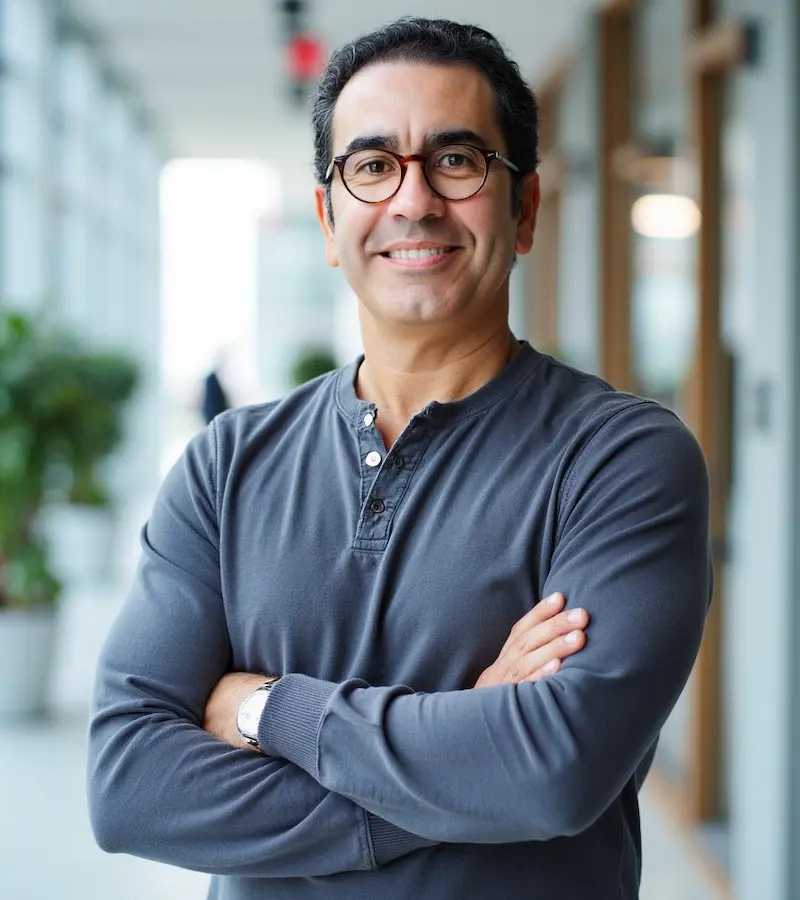
Meet Bruno Mazzilli, a Schiller International University alumnus whose journey from studying International Relations & Diplomacy and International Business in Madrid and Paris to leading enterprise technology solutions on a global scale reflects the true spirit of international education. A 1993 graduate with a passion for diplomacy, business, and cultural connection, Bruno transformed his global mindset into a successful career in digital transformation and business technology. In this alumni spotlight, he shares how Schiller’s multicultural environment, international exposure, and lifelong connections helped shape his path from diplomacy to the fast-moving world of tech innovation at Boomi.
Key Takeaways:
- How Schiller’s international learning environment prepared Bruno for leadership in global technology and business.
- Why communication, adaptability, and cultural awareness matter just as much as technical skills in digital transformation careers.
- Bruno’s advice for transitioning into tech without a computer science or engineering background.
- How global education and cross-cultural experiences helped Bruno build long-term professional relationships worldwide.
- Why digital transformation today is about connecting people, systems, and business strategies—not just technology alone.
Why did you choose Schiller International University?
 I chose Schiller because I was looking for a truly global education that mirrored the interconnectedness of the modern world. What immediately set Schiller apart for me was its unique multi-campus structure and dual-degree system; the opportunity to study across different world capitals while earning an education accredited in both the United States and Europe was unmatched.
“Schiller didn’t just give me a degree, it gave me the global mindset and adaptability I needed to launch a successful international career.”
Beyond the academic flexibility, I wanted to learn in an environment that went past the textbook. Schiller's diverse student body and small, personalized classes created a vibrant multicultural melting pot right in the classroom. Immersing myself in different cultures alongside peers from all over the world didn't just give me a degree—it gave me the global mindset and adaptability I needed to launch a successful international career.
You studied International Relations and Diplomacy together with International Business. What initially attracted you to these fields?
I have always been fascinated by how the world connects, handles conflict, and drives progress. What initially attracted me to International Relations and Diplomacy, alongside International Business, was the realization that you cannot fully understand one without the other. Politics and global governance set the rules of the game, while business acts as the engine of global interaction. I was drawn to the idea of understanding both sides: how diplomatic relations and geopolitics shape global markets, and conversely, how multinational trade influences foreign policy. Studying these fields together felt like acquiring a master key to decode the complexities of our globalized world, offering the perfect blend of analytical strategy, cultural empathy, and practical commerce.
When you think about your years at Schiller, what is the first memory that comes to mind?
When I look back at my time at Schiller, the first memory that floods back isn’t a single moment, but rather the vibrant energy of the campus. I instantly think of sitting in the student lounge or a local café after class, surrounded by a group of friends where five or six different nationalities were represented at a single table. It was a true global melting pot. We would be passionately debating a topic from our International Relations or Business lectures, only for the conversation to dissolve into laughter as we shared stories about our respective cultures, traditions, and home countries.
Meeting people from every corner of the world and realizing how much we had in common was incredibly eye-opening. We were all sharing this unique adventure together, making lifelong friends, and having an absolute blast while studying subjects we genuinely loved. It was the perfect balance of academic passion and unforgettable fun.
What skills or lessons gained from the programs you studied do you think have been most valuable in your professional life?
If my time studying International Business and Diplomacy taught me anything, it’s that real-world professional life is basically a high-stakes, never-ending group project—just with better clothes and higher stakes.
The most valuable skills I walked away with aren't just found in a textbook; they are the ultimate survival tools for the modern workplace:
- Corporate Mind-Reading (The Art of Diplomacy): Schiller taught me how to read a room faster than an algorithm. Knowing how to deliver tough feedback without starting a minor trade war, or how to negotiate a compromise when two departments are at a total standstill, has been an absolute superpower.
- Cultural Shape-Shifting: Thanks to the absolute melting pot of the student body, I learned how to seamlessly adapt communication styles. I can pivot from a highly structured, data-driven pitch for one client to a warm, relationship-focused conversation with another without missing a beat.
- Strategic Zoom-In/Zoom-Out: Studying business alongside global politics gave me the ability to look at a microscopic spreadsheet detail while simultaneously understanding how a macro-economic shift across the ocean might affect it next quarter.
Ultimately, the biggest lesson was adaptability. Schiller proved that when you throw together different cultures, perspectives, and ideas, magic happens—as long as you know how to listen. And honestly, loving what you do while doing it is the best business strategy there is!
Your career path eventually led you into technology and business solutions. How did that transition happen?
On paper, moving from diplomacy and international relations into tech and business solutions might look like a sharp left turn—but in reality, it felt like a completely natural evolution.
International Business taught me how organizations operate, while Diplomacy taught me how to understand human needs, solve conflicts, and bridge gaps. When I looked at the tech sector, I realized that the biggest challenges companies face aren't actually about the code or the hardware; they are about communication, integration, and problem-solving. Every piece of software or business solution is ultimately trying to get different systems, data, or people to talk to each other harmoniously—which is the very definition of diplomacy!
“I traded political arenas for digital ones, but the core mission remained exactly the same: navigating complex environments to find elegant solutions to global problems.”
I found myself drawn to tech because it is the ultimate lever for global impact today. I transitioned by positioning myself as the 'translator' between complex technical capabilities and real-world business needs. My background allowed me to look at technology not just as a tool, but as a strategic asset to scale businesses across borders. Ultimately, I traded political arenas for digital ones, but the core mission remained exactly the same: navigating complex environments to find elegant solutions to global problems.
How important was developing a global mindset during your university years, and how has that helped you in your career?
Developing a global mindset wasn't just important during my university years—it was the single most transformative asset I took away from Schiller, and it has been the bedrock of my career ever since.
In the technology and business solutions sector, we often say that tech has no borders. But while software can be deployed globally with the click of a button, human collaboration cannot. Having a global mindset means you don’t just tolerate cultural differences; you actively anticipate and value them. It taught me to approach problem-solving without the bias of a single country's perspective.
“Schiller essentially rewired my brain to see the big picture, and in today’s digital economy, that is exactly the perspective you need to succeed.”
In my career, this has given me a massive competitive edge. When managing international clients, cross-border teams, or complex business transformations, I don’t see cultural or operational differences as roadblocks. Instead, I see them as puzzles to be solved. It has allowed me to build trust quickly with diverse stakeholders, negotiate across cultures with ease, and design business solutions that are scalable yet sensitive to local nuances. Schiller essentially rewired my brain to see the big picture, and in today's digital economy, that is exactly the perspective you need to succeed.
You are currently working in the area of business technology. From your perspective, what role do integration platforms (iPaaS) play in supporting business growth and digital transformation?
To understand the role of Integration Platforms as a Service (iPaaS) in modern business, you have to imagine a massive, chaotic international airport.
In this metaphor, a company’s different software applications are the airplanes. You’ve got the Salesforce airliner, the SAP jumbo jet, the HubSpot private jet, and a dozen regional supply chain planes. Without an iPaaS, it’s absolute pandemonium. The pilots can't talk to each other, luggage (your data) is getting lost between transfers, and passengers (your customers) are stranded and furious.
Enter Boomi—the ultimate, ultra-modern Air Traffic Control Tower and hyper-automated baggage handling system all in one.
Boomi steps into this digital chaos and instantly solves the mess. From a technical standpoint, it provides a centralized, cloud-based platform that connects these disparate systems using low-code APIs, data transformation tools, and automated workflows. Instead of IT teams writing messy, fragile, custom point-to-point code to connect App A to App B—which breaks the moment one of them updates—Boomi acts as the universal translator and traffic controller. It ensures that data flows seamlessly, securely, and in real-time across the entire enterprise.
How Boomi Drives Business Growth & Digital Transformation:
- Breaking Down Silos (No More Stranded Luggage): Boomi ensures that marketing, sales, and finance are all looking at the exact same, real-time data. When a customer buys something, the inventory updates, the invoice sends, and the CRM notes it instantly.
- Agility at Scale (Adding New Flight Routes): If a business wants to adopt a hot new AI tool or a better analytics platform, they don't have to rebuild their infrastructure. With Boomi’s drag-and-drop integration, you just 'plug it in' to the tower. It allows companies to scale and innovate at lightning speed.
- Automating the Boring Stuff: It completely eliminates manual data entry. By automating repetitive tasks across completely different platforms, it frees up human beings to do what they do best: think strategically and grow the business.
In short, digital transformation isn't just about buying the best software; it’s about making sure your software actually talks to each other. Boomi is the diplomatic mediator of the tech world, clearing the runway of all that mess so the business can truly take off!
You are still in contact with some of your Schiller classmates today. Looking back, what memories or experiences from your time at Schiller have stayed with you the most, and why do you think those connections have lasted over the years?
Yes, absolutely! I am still in close contact with several of my Schiller classmates today, and honestly, those friendships are some of the most meaningful connections in my life.
When I look back, the memories that stick with me the most are the shared adventures of navigating a new country together—whether it was exploring a new city on the weekends, figuring out local transit, or cramming for midterms in a crowded campus study room while sharing snacks from three different continents.
I think these connections have lasted over the years because they were forged in a very unique environment. Going to an international university like Schiller means you are surrounded by people who are equally adventurous, open-minded, and courageous enough to leave their comfort zones. We didn't just go to class together; we grew up together in a home away from home.
Today, our group chats are a wild mix of different time zones, and even though we are scattered across the globe working in completely different industries, that foundational bond remains unbroken. Whenever we catch up, it feels like no time has passed at all. We share a unique history of a time when the world was our campus, and that kind of connection lasts a lifetime.
From your perspective, what makes careers in digital transformation exciting today?
For me, this isn't just a job title; it's the natural destination of a journey that started back at Schiller. When you spend years studying how nations interact and how global markets move, you realize that the ultimate force driving change today isn't politics—it's technology. Transitioning into this field allowed me to take that global mindset and apply it to the front lines of business.
What makes careers in digital transformation so incredibly exciting today boils down to three things:
- Leading the Next Industrial Revolution: We aren't just updating software; we are standing at the absolute vanguard of a brand-new industrial revolution. By integrating hyper-automation, AI, and cloud technology, we are actively rewriting the rules of global commerce and shaping how the future world will operate.
- Navigating High-Stakes Diplomacy: It’s a highly dynamic and fiercely competitive environment where tech meets strategy. Success means stepping into the arena to negotiate major deals and align a massive web of diverse stakeholders—from tech developers to C-suite executives—proving that modern business transformation requires as much diplomacy as it does data.
- Busting Corporate Myths: We get to be the ultimate problem-solvers, walking into organizations to smash ancient, slow-moving silos. There is nothing more thrilling than taking a chaotic, legacy-bound process, applying cutting-edge solutions like Boomi, and transforming it into a lightning-fast digital engine that drives massive growth.
What advice would you give to someone interested in how to transition into technology careers but who does not come from a technical background?
If you had told me during my International Relations and Diplomacy lectures at Schiller that I would be working in business technology today, I probably would have laughed. Transitioning into tech without a traditional computer science or engineering background wasn't easy. There were definitely moments of imposter syndrome, steep learning curves, and times I felt like everyone else was speaking a completely different language. But I can tell you with total honesty: it has been entirely worth it, and I highly recommend making the leap.
If you are looking to make that same transition, here is the practical advice I wish someone had given me when I started:
- Own Your Non-Technical Superpowers: Tech companies don’t just need people who can code; they desperately need people who understand human beings, business strategy, and communication. My background in diplomacy and international business became my secret weapon. It allowed me to be the 'translator' who could talk to engineers, understand the tech, and then negotiate deals or explain solutions to business clients. Your unique background is an asset, not a deficit—lean into it.
- Become a Lifelong Learner (Step by Step): You don't need to go back to university for a four-year engineering degree. Start small and follow your curiosity. Focus on understanding the logic of how technology works and how different systems talk to each other. Look into modern, user-friendly, low-code integration platforms like Boomi, or take accessible online courses in cloud fundamentals and project management. Tech changes so fast that being adaptable and willing to learn is worth more than any static degree.
- Build Bridges, Not Just Skills: Tech is fundamentally a collaborative industry. Talk to people who are already doing the job you want, ask them questions, and learn from their journeys. Be humble, stay curious, and remember that every expert was once a beginner.
“Your unique background is an asset, not a deficit—lean into it.”
The tech world is shaping the future of our world, and it needs diverse perspectives from all walks of life to do it right. It takes some grit to cross that bridge, but the view from this side is absolutely incredible. Go for it!
Discover Our Campuses