 Request information

Student Spotlight: Amer Al-Khawaldeh Publishes Research on U.S. External Imbalances and Global Dynamics
Schiller International University is proud to highlight the academic achievement of Amer Al-Khawaldeh, a student in our Master of Arts in International Relations and Diplomacy (Distance Learning) program, who has recently published a research paper titled: “The U.S. External Imbalance Paradox: Domestic Roots, Political Shifts, and Global Consequences.”
The publication reflects a high level of academic rigor and offers a timely analysis of one of the most complex and debated issues shaping today’s global system.
An Interdisciplinary Perspective on a Global Issue
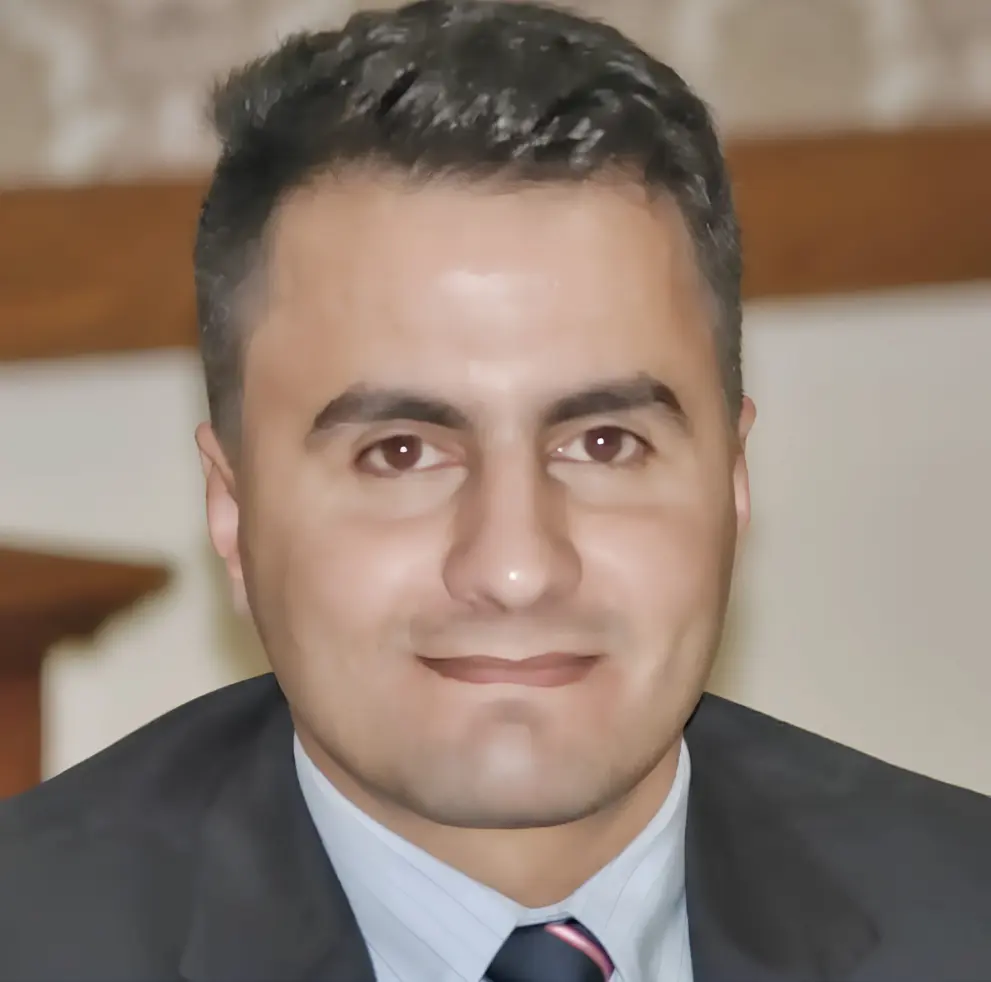 Amer’s research stands out for its interdisciplinary approach, combining international macroeconomics, political economy, and international relations to explore how persistent U.S. external imbalances influence global dynamics. By connecting domestic economic structures with international outcomes, the research offers a comprehensive perspective on a topic that continues to define global discourse.
His work focuses on understanding how this imbalance has become a structural force shaping gradual changes in the international system. Using an analytical and interpretive approach, the paper traces three key dimensions: the domestic roots of the imbalance, its political evolution, and the global responses it has generated.
A Milestone for Academic and Professional Growth
Originally developed as part of his coursework, the paper evolved into a formal academic publication. Amer credits the guidance of Dr. Nadia Al-Khateeb, whose feedback played a key role in refining the research and strengthening its analytical framework. The paper’s acceptance and assignment of a DOI marked an important milestone, transforming it into a contribution that can be referenced within broader academic and policy discussions.
Amer’s achievement highlights the strength of the Master of Arts in International Relations and Diplomacy at Schiller International University, particularly its Distance Learning modality. The program enables students to balance academic work with professional and personal commitments while engaging in meaningful, research-driven learning and developing work that contributes to real academic and policy discussions.
The Thinking Behind the Research: in the Author’s Words
As part of this milestone, the university conducted an interview with Amer to gain further insight into his research process, key findings, and personal academic journey.
In his responses, he emphasizes the importance of patience, revision, and continuous learning—viewing research as a long-term process rather than a one-time outcome.
You can read the whole interview below and access the full paper here
What inspired you to research the U.S. external imbalance, and why did you feel this topic was important to explore right now?
My interest in the U.S. external imbalance stems from the belief that it is not simply a technical economic issue, but one of the key drivers behind the transformations unfolding in the global system today. The United States’ ability to sustain a large and persistent external deficit without facing the usual adjustment pressures represents a central paradox—one that helps explain growing tensions within the international order.
This topic is especially important now because that paradox has increasingly shaped global responses. In recent years, the politicization of economic instruments has coincided with a gradual shift by multiple actors toward institutional hedging strategies, such as reserve diversification, greater reliance on gold, and expanded use of local-currency settlement. These developments reflect a slow erosion of confidence in the neutrality and predictability of the existing system.
Rather than anticipating a sudden collapse, this research seeks to understand how the U.S. external imbalance has become a structural force influencing gradual change in the global order, driven by unresolved pressures at its center.
Can you briefly explain the approach or methodology you used to develop your argument and structure the paper?
The paper adopts an analytical and interpretive approach that brings together insights from international macroeconomics and international political economy. Rather than relying on quantitative modeling or statistical testing, the focus is on understanding the underlying mechanisms that connect domestic economic imbalances to political choices and global outcomes.
Structurally, the argument is developed as a sequential analytical path. It begins with the domestic roots of the U.S. external imbalance, moves through the political rearticulation of these imbalances during the Trump era, and concludes by examining how international actors have responded through gradual forms of institutional hedging rather than systemic rupture.
This approach allows the paper to explain continuity and change simultaneously, showing how persistent economic structures shape political behavior and, over time, influence broader shifts in the international monetary system.
How did you overcome moments of doubt, complexity, or feedback during the writing and submission process?
Moments of doubt and complexity were a natural part of the research process, especially when trying to connect international macroeconomics with international political economy within a single analytical framework. Rather than expanding the argument, I addressed these moments by refining the research question and simplifying the analytical path to improve clarity and coherence.
In this context, the guidance of Dr. Nadia Al-Khateeb, who taught IR545 International Economic Problems, was particularly important. Her feedback during class discussions, as well as her detailed comments on the Individual Written Project—which later became the foundation of this research—were not only technical, but also deeply encouraging. Her support played a key role in helping me move beyond moments of doubt and approach the project with greater confidence.
Overall, I treated feedback and complexity as tools to strengthen the argument rather than obstacles, allowing the paper to mature gradually into its final form.
How did it feel when you found out your paper was accepted and assigned a DOI? What does this milestone mean to you personally and academically?
Finding out that the paper was accepted and assigned a DOI was both reassuring and motivating. It marked a clear transition from a course-based assignment to a piece of work that is formally documented and can be referenced within a wider academic conversation. That recognition gave the research a sense of stability and continuity beyond the classroom.
Academically, the DOI felt more like a starting point than an endpoint. It encouraged me to think of this work as part of a longer research trajectory rather than a standalone outcome. I am currently working on another research project and intend to continue developing my work in this field without interruption, building on feedback and gradually transforming my ideas into peer-reviewed articles and policy-oriented papers.
On a personal level, this milestone strengthened my confidence in pursuing research and publication as a cumulative, long-term process grounded in learning and refinement.
What skills or insights did you gain through this process that you think will be most valuable for your future career in International Relations and Diplomacy?
One of the most valuable insights I gained through this process was the ability to approach international issues from a structural, long-term perspective rather than as isolated events or short-term crises. Working on this research strengthened my understanding of how economic imbalances develop domestically and how they are later translated into political dynamics that shape international relations.
The process also deepened my understanding of global governance and the constraints facing the United Nations and other international organizations. Many of these challenges are not rooted in the absence of rules or principles, but in underlying power asymmetries and economic incentives that limit the effectiveness of collective action. Recognizing these structural limits is essential for realistic and credible international engagement.
Professionally, this experience helped me develop a disciplined, sequential way of thinking—one that emphasizes indirect effects, institutional constraints, and long-term consequences. I see these skills as highly relevant to a future career in International Relations and Diplomacy, where understanding the foundations of the international system is as important as managing its day-to-day outcomes.
What advice would you give to other Schiller students who are interested in research or publishing their work while studying?
I would encourage Schiller students who are interested in research or publishing to approach their academic assignments as opportunities rather than obligations. Many strong research ideas can begin as individual projects or course assignments if they are approached with curiosity and genuine engagement, rather than simply as tasks to be completed.
It is also important not to rush the publication process. Research develops gradually through drafting, feedback, and careful revision, and class discussions and academic guidance play a key role in that progression.
For me, this journey has even changed how I think about time. I have found myself—somewhat unexpectedly—viewing academic breaks as opportunities for reading, writing, and reflection, not only as periods of rest. This shift made the research process more enjoyable and helped me see learning as a continuous path rather than something confined to a single course or semester.
Update: New Research Publication on Trade Decision-Making Under Geopolitical Uncertainty
Since the publication of this Student Spotlight, Amer Al Khawaldeh has continued to advance his research contributions with a new paper titled Bilateral Relationship Risk Under Geopolitical Uncertainty: A Stage-Based Model and Checklist for Trade Decision Support. Read the paper.
The paper presents a stage-based model and practical checklist designed to support the assessment of bilateral trade relationships in an increasingly complex geopolitical environment. The framework examines factors such as exposure, adjustability, economic and operational risk, as well as political and institutional considerations, providing a structured approach to trade-related decision-making under uncertainty.
This latest publication further demonstrates Amer's commitment to addressing contemporary global challenges through research and highlights the continued impact of Schiller students in contributing to discussions on international economics, trade, and geopolitical risk.