Request information
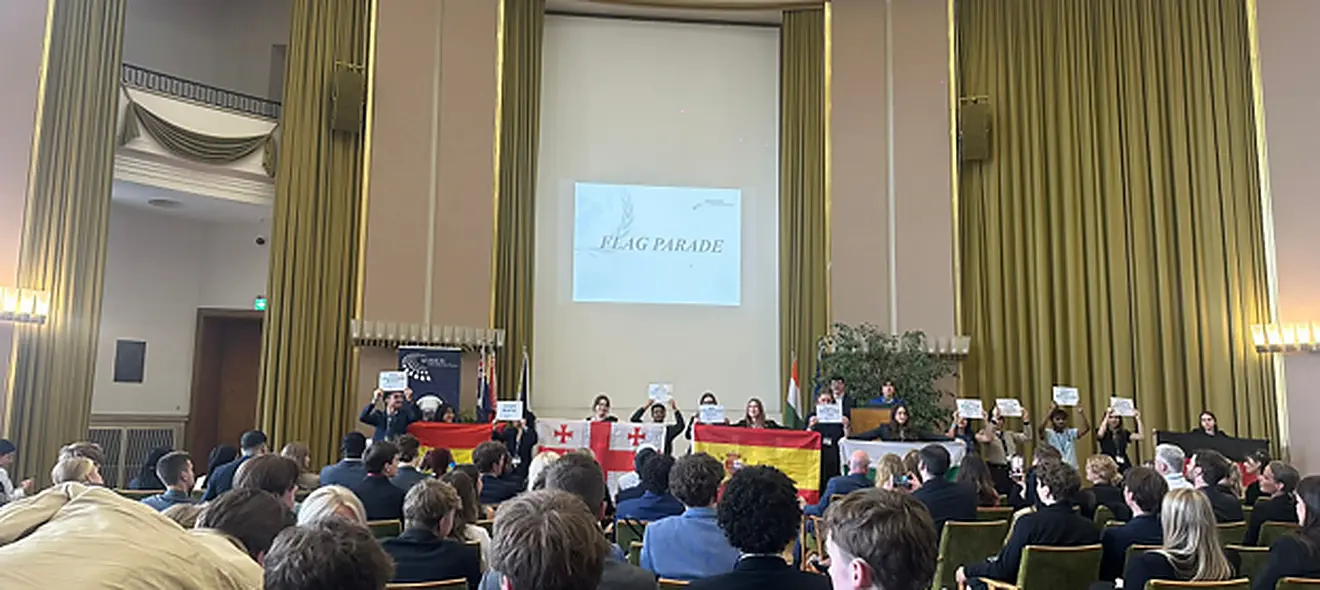
Schiller Debate Club Shines at International Model United Nations Conference in Frankfurt
A delegation of just four students from Schiller International University's Debate Club recently travelled to Frankfurt and delivered an impressive performance at an international Model United Nations (MUN) conference, earning individual awards across multiple committees and securing second place in the overall delegation rankings.
Competing against significantly larger delegations from universities across Europe, the Schiller team demonstrated the power of preparation, diplomacy, public speaking, and cross-cultural collaboration. Despite being the smallest delegation at the conference, all four students received Outstanding Delegate awards in their respective committees, helping Schiller achieve one of the strongest results of the event.
Key Takeaways
- Four Schiller students represented Schiller at an international Model United Nations conference.
- Every member of the delegation received an Outstanding Delegate award.
- The team finished second overall among participating university delegations despite being the smallest delegation at the conference.
- The students collectively spoke nine languages and represented multiple nationalities, reflecting Schiller's international community.
- The experience strengthened skills in diplomacy, negotiation, public speaking, leadership, and international cooperation.
A Small Delegation with a Big Impact
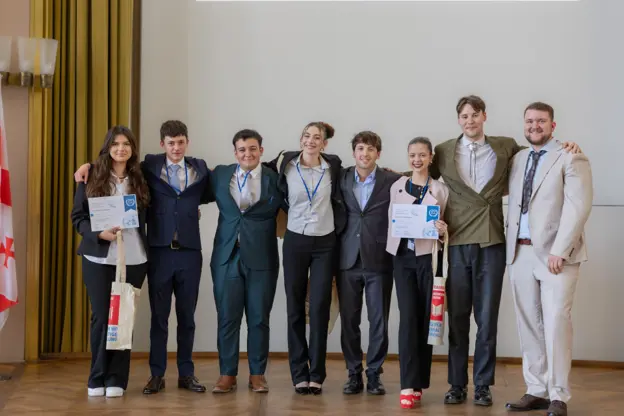 Schiller's team consisted of only four delegates. The delegation included students from Kyrgyzstan, Armenia, Malta and Lebanon, collectively speaking nine languages. This international diversity became one of the team's greatest strengths throughout the competition. As one student explained:
"We were the smallest delegation there. Other universities brought 10, 15, even 16 students. We were only four."
Despite their size, the team's performance earned recognition across multiple committees and ultimately secured second place in the overall delegation rankings.
Tackling Global Challenges Across Multiple Committees
The students represented different countries and participated in several specialized committees addressing major international issues. Topics included:
- International cybersecurity and foreign affairs
- Human rights and international governance
- Counterterrorism and regional security
- The role of ISIS in global security discussions
Each delegate was required to represent the official position of an assigned country, regardless of their personal views. For many participants, this was one of the most valuable aspects of the Model United Nations experience.
"You might not completely agree with the country you're representing, but you still need to understand its foreign policy and be able to defend it."
The experience challenged students to research complex geopolitical issues, build persuasive arguments, negotiate with other delegations, and seek consensus on international resolutions.
Public Speaking and Debate as a Competitive Advantage
Throughout the conference, students discovered that one of Schiller's greatest strengths was its focus on debate, communication, and public speaking. While some delegations had more extensive MUN experience, Schiller students relied on skills developed through the Debate Club and classroom discussions.
"Schiller is very good at public speaking and debating. That's what really gave us the edge."
Students noted that preparation, research, and confidence in public speaking allowed them to compete successfully against delegates from much larger universities. The experience reinforced the importance of being able to communicate ideas clearly, defend positions under pressure, and respond effectively to challenges from other participants.
Learning Diplomacy Through Real Negotiation
Beyond speeches and formal debates, students spent significant time negotiating with other delegations and working toward consensus. These interactions required participants to identify common ground between countries with very different interests and priorities. One delegate highlighted the importance of diplomacy during the resolution-writing process:
"The United States and China may not agree on everything, but can we find common ground on this issue?"
The ability to negotiate, compromise, and build coalitions became just as important as public speaking throughout the conference. Students learned that successful diplomacy often depends on understanding how far different actors are willing to compromise while still protecting their interests.
Growing Recognition for the Debate Club
The success of the delegation reflects the continued growth of Schiller's Debate Club and its expanding presence within the international Model United Nations community. Students noted that the conference provided an opportunity to introduce Schiller to universities that had not previously encountered the institution in MUN competitions.
Through strong performances, collaboration, and professionalism, the delegation helped raise the university's profile while building relationships with students and institutions from across Europe.
Most importantly, the experience demonstrated how preparation, teamwork, and confidence can help a small group compete successfully on an international stage. For the four delegates, the conference was not only an opportunity to win awards, but also a chance to strengthen friendships, develop new skills, and gain firsthand experience in the art of diplomacy.

Discover Our Campuses
Our BA in International Relations and Diplomacy is available online and at the following campuses: