Request information
Top Eight Reasons to Study a Master's in International Relations in Florida
When you think about the world today, it is impossible to separate national decisions from global systems. Governments, businesses, humanitarian agencies, and international organizations make choices based on cross-border relationships, foreign policy goals, and cultural understanding. If you want to understand these dynamics and work at the center of global governance, diplomacy, or international development, then a master’s in international relations is an excellent first step.
And while the US is home to some of the most established global diplomacy programs, Florida is quietly becoming one of the most relevant places to study international relations today. With strong international ties, multicultural cities, diverse communities, and a growing international economy, the state offers an environment where you can learn, observe, and participate in global systems in real time.
Whether you are interested in political science and diplomacy master’s programs, researching international relations degrees in Florida, or wondering about American universities with truly global exposure, Florida’s academic and cultural diversity ensures that you have a distinct advantage.
8. A Balanced, Globally Connected Student Life
Studying global affairs requires focus and intensity, but your environment outside of the classroom matters too. The economy in Florida offers a balanced lifestyle, warm weather, access to beaches, outdoor activities, and a strong international cultural scene. It feels like a globally connected study experience, but with the academic stability, safety, and infrastructure of a major American state.
Students from abroad also appreciate how Florida blends local culture with global influences, making it easier to adapt. You experience international relations not only through academic content, but through daily life in a globally connected space.
7. Strong Career Pathways in Global Policy, Diplomacy, and International Development
One of the biggest benefits of studying international relations and diplomacy in Florida is access to diverse career pathways. With its global economy, diplomatic connections, and international partnerships, Florida offers opportunities across:
- Foreign service and diplomacy
- Multinational corporations
- International development agencies
- Humanitarian and human rights non-governmental organizations (NGOs)
- Public services and international agencies
- Global governance and institutions
- International communications and policy research
- Think tanks and policy centers
Whether you aim to work in international diplomacy, global business, humanitarian relief, or foreign policy analysis, Florida’s professional environment supports real career mobility.
6. Florida’s Academic–Industry Integration Gives You Practical Policy Insight
One of Florida’s strengths is how closely universities collaborate with government agencies, policy institutes, international business councils, and non-profit organizations. When you study a master’s in international relations here, you are going beyond theory and learning practically how global policy translates into real decisions. Across Florida, academic departments regularly work with:
- International trade and diplomatic offices.
- Global research centers focused on security, migration, and governance.
- Policy think tanks analyzing Latin America–US relations.
- International business coalitions.
- Environmental and climate policy organizations.
As a result of this integration, you will be able to attend public lectures, assistantships, policy simulations, and research-led events that reflect the complexity of real diplomatic and global governance settings. If you are interested in foreign policy analysis, public service, or multilateral negotiations, this environment gives you a structured way to expand your academic perspective and build practical insight.
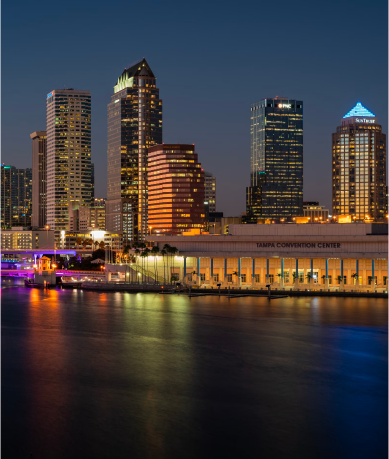
5. Tampa is a Growing Hub for Global Affairs and Graduate Study
Tampa is emerging as one of the top cities for students seeking global exposure in the US. The region’s international connectivity, multinational workforce, cultural diversity, and global business environment make it especially relevant for graduate-level studies. Choosing graduate programs in Tampa means you will be in a city where:
- Global trade and maritime operations shape economic policy.
- Multinational companies recruit international talent.
- Diplomatic representatives regularly visit for economic collaborations.
- International events and conferences provide learning opportunities.
For international students, Tampa is also known for being welcoming, diverse, and safe, which makes it easier to settle, study, and build a community.
4. Real-World Exposure to Diplomacy, Global Business, and International Organizations
As an international relations student, you need proximity to institutions that influence global decisions. Florida’s rapidly expanding international economy gives you this exposure. The state hosts:
- International trade offices representing dozens of countries.
- Global companies headquartered in Florida.
- Humanitarian organizations and NGOs such as the United Nations Association of the USA (UNA-USA) Orlando Chapter, and Food For The Poor (FFP).
- Public service institutions involved in international partnerships.
- Global logistics and shipping centers.
- Cross-border investment networks.
When you pursue a career in international relations, this ecosystem matters. It allows you to observe how policy decisions impact trade, diplomacy, business, and security on a global level.
3. Florida Offers Academic Environment Built Around Global Issues and Policy Learning
When you pursue a master’s in international relations in Florida, you enter a state where academic communities are deeply engaged with global affairs. Instead of focusing only on political theory, Florida’s international relations landscape encourages you to examine how global systems actually function. This includes diplomacy, international organizations, global governance, foreign policy, and intercultural communication. Across the state, academic spaces emphasize:
- Understanding diplomatic studies in a real-world context.
- Analyzing international organizations and NGOs and their impact.
- Exploring global leadership and policy through case-based learning.
- Engaging with foreign policy analysis connected to current events.
- Developing negotiation, research, and cross-cultural communication skills.
This environment helps you build the analytical depth needed for global policy and diplomacy, without feeling disconnected from the real issues.
2. A Multicultural Learning Environment That Strengthens Your Diplomatic Skills
Studying international affairs requires more than academic knowledge. You need intercultural communication skills, cultural sensitivity, and the ability to navigate global contexts. The state of Florida naturally offers this.
With one of the highest concentrations of international residents in the US, Florida is home to global communities, multilingual neighborhoods, and international students from around the world. You will learn alongside peers from Europe, Asia, Africa, Latin America, and the Middle East, each group bringing perspectives that enrich classroom discussions.
This multicultural learning environment mirrors the global settings in which you may be employed, such as embassies, multinational companies, humanitarian NGOs, or international agencies. By interacting with diverse communities daily, you build diplomatic understanding long before you enter the field.
1. Florida’s Global Connectivity Gives You Real Exposure to International Affairs
Florida sits at one of the world’s most strategic crossroads. As the US gateway to Latin America and the Caribbean, the state maintains deep political, cultural, and economic ties with dozens of countries. By virtue of this geographical location, studying international relations in Florida is not just about learning theory, but about participating in global interactions as they take place.
Major cities such as Tampa, Miami, and Orlando host consulates, international chambers of commerce, global trade offices, and cultural institutions. These organizations foster diplomacy, create economic partnerships, and encourage cultural exchange, giving you access to real-world examples of foreign policy in action.
Schiller International University Tampa
Schiller International University’s Tampa campus exemplifies how Florida institutions embrace worldwide perspectives. Through our MA in International Relations and Diplomacy program, you will learn in an academic setting shaped by diverse global experiences, where classroom discussions are enriched by peers from multiple regions, cultures, and policy backgrounds.
Building a career in international relations requires an environment where global issues feel real, where cultures intersect naturally, and where learning is shaped by genuine international interaction. Florida offers that combination. The state gives you the chance to study global affairs in a setting that mirrors the complexity of the world you want to work in. Whether you see yourself contributing to foreign service, humanitarian work, multinational organizations, public policy, or international development, Florida provides a foundation that supports both your academic growth and your long-term ambitions.
Explore Schiller's MA in International Relations and Diplomacy to see how a globally oriented academic model can support your goals.
FAQs
Q1. What are career options after earning a master’s in international relations in Florida?
Answer: You can pursue roles in diplomacy, the foreign service, international NGOs, multinational corporations, global communications, public policy, think tanks, economic development agencies, and humanitarian organizations.
Q2. How does Schiller International University’s Tampa campus support international students?
Answer: The campus provides academic advising, career support, an intercultural environment, and pathways to global mobility through Schiller’s international campus network.
Q3. Is a master’s in international relations from Florida recognized globally?
Answer: Yes. Degrees from American-accredited universities are widely recognized, especially when the curriculum includes global governance, foreign policy, and international diplomacy.
Q4. What makes Florida a unique destination for studying global affairs?
Answer: Its global connectivity, multicultural population, international organizations, diplomatic presence, global trade networks, and strong academic programs make Florida ideal for international relations and global affairs education.
Q5. Can I transfer between Schiller campuses while pursuing my degree in international relations?
Answer: Yes. Schiller International University allows eligible students to study across campuses in Florida, Spain, Germany, and France, offering immersive global learning experiences.
Discover Our Campuses