 Request information

How an International Education Builds Career-Ready Skills for Your Child
International education does something a purely domestic degree rarely manages it forces growth. Not just academic growth, though that matters too. The kind of personal, professional, and adaptable development that employers look for and that careers are actually built on.
As a parent, you're weighing a significant investment, the tuition fees, the distance, the quiet uncertainty about whether your child is ready for life in another country. Those concerns are understandable. It often becomes less about whether they can handle it, and more about what the experience might give them in return.
The research is consistent. Students who pursue international education for students develop career-ready skills at a measurably faster rate than peers who don't. They become more confident communicators, more resilient problem-solvers, and more capable of operating in environments that don't look like home. This is what global education benefits actually look like when you move beyond the brochure.
Key Takeaways:
- International education accelerates the development of communication, leadership, adaptability, and independent thinking.
- Global competence in students directly improves long-term employability across international job markets.
- Skills gained from studying abroad extend beyond language exposure or cultural curiosity—they can also translate into professional capabilities.
- The multicultural learning environment of an international campus prepares students for diverse teams and global workplaces.
- Benefits of international education are measurable in graduate outcomes, employer ratings, and career trajectory data.
Why International Education Builds Career-Ready Skills That Last
Employers talk about career-ready skills constantly, and they regularly say those skills are harder to find than most graduates realize. A 2024 NAFSA report on international competence and career readiness found that graduates who had studied internationally were rated significantly higher by employers for cross-cultural communication skills, adaptability, and independent problem-solving.
This is not a coincidence. International education for students creates the conditions in which these skills are developed. You can't navigate a new country, a new academic system, and a genuinely new social environment without building resilience, flexibility, and real communication ability.
The Gap That Traditional Education Often Leaves
Domestic education does many things well. But it rarely pushes students out of familiar norms, familiar peer groups, or familiar ways of approaching problems. The result is graduates who are academically solid but professionally narrow.
Global competence in students, the ability to understand, communicate with, and work productively alongside people from different cultural backgrounds — is increasingly treated by global employers as a baseline requirement. Students who develop it during their degree arrive with an advantage that peers who stayed home are still working to build.
The Career-Ready Skill Pillars Built Through International Education
Cross-Cultural Communication
Cross-cultural communication skills are built through daily practice in an international environment. A student studying alongside peers from twenty different countries develops an instinctive ability to read situations, adjust communication styles, and build professional trust across cultural differences. That skill transfers directly, and durably, to any international workplace.
Adaptability and Resilience
Adaptability and resilience are not just personality traits. They are the result of specific, sustained experiences. Moving abroad, navigating administrative systems in a second language, building a social life entirely from scratch: these experiences build a problem-solving orientation under uncertainty that employers recognize and actively value. It's one of the most documented study abroad advantages for students in graduate outcome research.
Critical Thinking and Problem-Solving
Critical thinking and problem-solving develop fastest when familiar support structures are removed. An international student who hits a genuine obstacle, one they can't solve by doing what they've always done; has to think differently. That capacity for flexible, composed problem-solving is exactly what future-ready skills education is supposed to produce, and what many domestic graduates struggle to demonstrate convincingly.
Leadership and Collaboration
Leadership and teamwork skills emerge naturally in multicultural settings. Students learn to lead teams where communication styles, professional expectations, and working rhythms vary widely. They learn to collaborate with people who approach problems from entirely different angles. That preparation for global management roles is better than almost anything a homogeneous domestic campus can offer.
|
Skill Pillar |
How International Education Builds It |
Why It Matters to Employers |
|
Cross-cultural communication |
Daily practice in diverse peer environments |
Essential in global team structures |
|
Adaptability and resilience |
Navigating unfamiliar systems independently |
Global business demands flexible thinkers |
|
Critical thinking |
Problem-solving without familiar safety nets |
Complex challenges require fresh approaches |
|
Leadership and teamwork |
Leading and collaborating across different norms |
Global management requires cross-cultural authority |
|
Language proficiency |
Exposure to multiple languages in daily life |
Direct advantage in international markets |
The Long-Term Return on International Education
Is international education worth it for long-term career growth? The evidence says yes, consistently and across multiple studies. Students who complete degrees internationally enter the job market with a personal narrative that stands out, and with verified, demonstrable skills that peers who stayed home are still trying to develop.
Independent learning skills, global networking opportunities, and cultural intelligence (CQ) are not built in a lecture theatre. They're built in the moments between, in conversations with classmates from five continents, in internships in unfamiliar industries, in the self-reliance that comes from being far from home and figuring things out anyway.
For parents, the real question is not whether international education benefits are real. They are, and the data supports that clearly. The question is finding the right environment for your child to develop them at a pace and depth that genuinely prepares them for what comes next.
International Education Is an Investment That Pays Forward
International education is not simply a degree with a different stamp on it. It's a structured way of building a young person into someone who can genuinely perform in the global workforce with the communication range, the resilience, and the professional self-awareness that modern employers demand.
Career-ready skills are not taught in isolation. They're developed through sustained experience in conditions that challenge and stretch. The conditions that produce them fastest are precisely the ones that studying internationally creates new cultures, new challenges, new peer networks, and the sustained experience of operating outside your comfort zone.
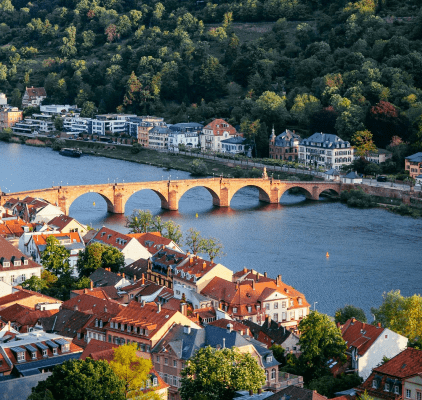
Schiller International University was built around this idea. With campuses in Madrid, Paris, and Heidelberg, the university offers international education for students designed to develop genuine global competence and the practical skills that careers are built on. For parents looking for a program that continues delivering value long after graduation, Schiller's internationally structured degrees are worth a close look.
FAQs:
Q1: How does international education help students develop career-ready skills?
International education places students in environments where adaptability, cross-cultural communication skills, and independent problem-solving are daily requirements, not elective experiences. The skills developed through these conditions are directly transferable to global workplaces and are consistently valued by employers across industries.
Q2: What is global competence in students?
Global competence in students refers to the ability to understand different cultural perspectives, communicate effectively across cultural contexts, and work productively in diverse environments. It develops through sustained international experience and is increasingly treated as a foundational professional requirement by multinational employers, not an optional extra.
Q3: Does studying abroad improve employability?
Yes, with consistent research backing. Studies from NAFSA and other organizations show that graduates with international study experience are rated measurably higher by employers on key professional attributes, including adaptability, critical thinking and problem-solving, and cross-cultural communication, compared to graduates who only studied domestically.
Q4: What skills do students gain from international education?
Students develop a broad range of professional and personal capabilities: cross-cultural communication skills, adaptability and resilience, independent learning skills, leadership in diverse teams, cultural intelligence (CQ), and the kind of global perspective that only comes from genuinely living and studying outside your home country.
Q5: Is international education worth it for long-term career growth?
For the vast majority of students, yes. The combination of a recognized qualification, demonstrated intercultural skills development, and real international experience creates a professional profile that stands out in competitive hiring environments. The longer-term career trajectory for internationally educated graduates is also typically broader, more geographically mobile and more adaptable to shifting industries.
Discover Our Campuses