Request information
How Multicultural Professors Change the Way You Think
You probably made friends from around the world during school/college; maybe a roommate from Japan, a classmate from Brazil, or a study group partner from Germany. These friendships expand your horizons and teach you so much about different cultures.
But here is what you might not have considered: what happens when your professors bring their multicultural experience into the classroom? That is when the real transformation begins. Learning from multicultural educators adds to your knowledge. It fundamentally changes how you think, question, and solve problems.
Who Are Multicultural Professors?
Multicultural professors are culturally diverse educators who bring teaching experience from different nationalities and backgrounds directly into the classroom. They are global professors who have worked across continents, taught in international universities, and collaborated with diverse academic teams. This means you learn from people who understand how ideas, industries, and workplaces operate across borders.
When we talk about international higher education faculty, we refer to professors who have experienced multiple education systems and professional environments. They introduce you to different business practices, academic traditions, and ways of thinking across cultures. These perspectives shape how they teach, turning lectures and assignments into learning experiences in a global context.
How Multicultural Professors Change Your Thinking Process
Multicultural professors transform your thinking. You will not see these changes within a day, but you will feel the difference eventually over time. But how does that happen?
Exposure to Diverse Perspectives
One thing we do not realize is that we have all been shaped by our own cultural background. Your multicultural professors help you see it. When you learn from someone with international teaching experience, you learn different ways to approach problems. You also realize that what seems like common sense in your culture might be completely different elsewhere.
In a diverse academic environment, you learn that there are multiple valid ways to think about everything. Your professor from Spain might approach business ethics differently than your professor from Paris. These differences are not right or wrong; they are just different, which means richer learning for you.
Stronger Critical Thinking Skills
Critical thinking through diversity is one of the most valuable skills you can develop in a multicultural classroom. When global educators present information, they naturally show you how the same situation looks different depending on your cultural lens.
This way, you think more deeply. You learn not to accept just one answer. You have to understand why different cultures reach different conclusions.
We believe that this is what separates exceptional students from typical ones. Your multicultural professors train you to ask better questions, to dig deeper, and to recognize that complexity is normal.
Challenging Assumptions and Biases
We all carry unconscious biases shaped by our upbringing and environment. Multicultural professors gently help you recognize yours. They challenge you to examine why you think something is ‘normal’ or ‘the right way.’ When a professor shares how their home country handles the same issue completely differently, it cracks open your assumptions.
It is not uncomfortable for the sake of being uncomfortable. It is growth. You are learning to expand your own cultural lens and to understand how other lenses are equally valid.
Increased Self-Awareness and Empathy
As you are introduced to different worldviews and ways of thinking, something else also happens: you become more self-aware. You start to see yourself as a global citizen with your own set of assumptions, rather than just another international student. With that awareness comes empathy.
Culturally diverse educators model this empathy every day in their classrooms. By sharing their own experiences of navigating multiple classrooms across diverse cultures and countries, they show you what genuine intercultural learning looks like. You absorb it through their teaching, their stories, and their teaching approach to students.
Impact of Diverse Learning on Classroom Experience
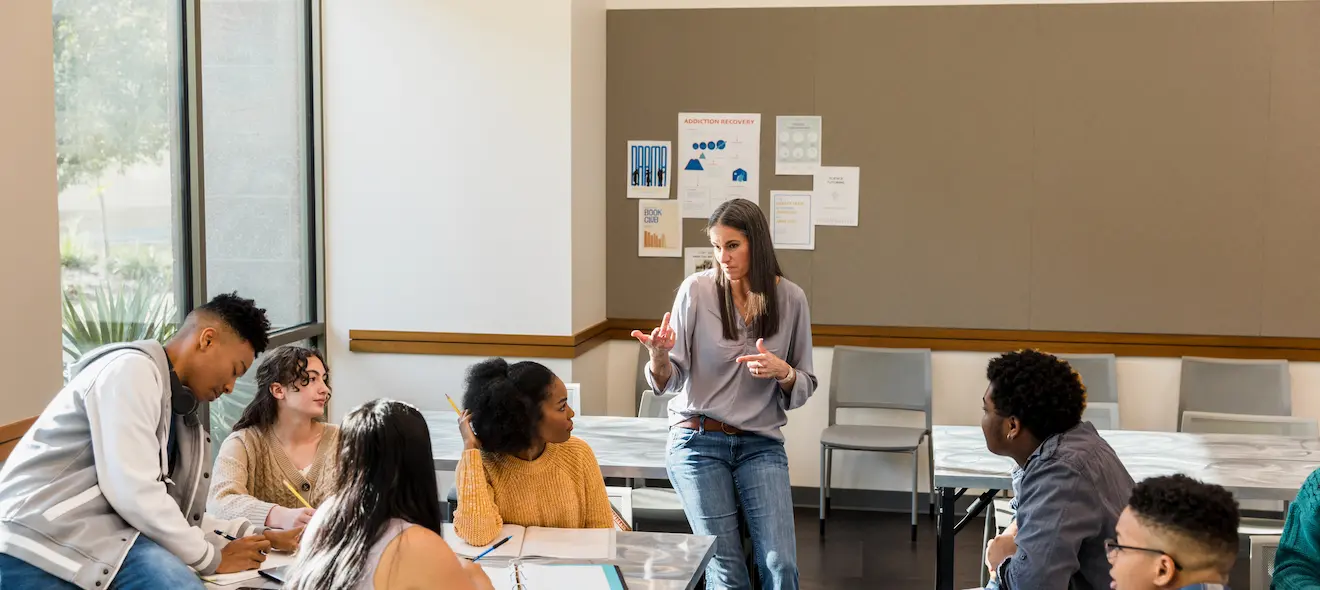
Diverse learning environments make classrooms more engaging, inclusive, and discussion-driven. When students learn from professors with varied cultural backgrounds, ideas are exchanged more openly, leading to richer conversations and deeper understanding. This helps you develop:
1. Cultural Intelligence in Education
In a global classroom with international professors, you learn from people who have successfully taught students from diverse cultures and backgrounds. That expertise is embedded in how they teach. Slowly, you start picking up cultural nuances without even realizing them.
In international classrooms, cultural intelligence shows up in everyday situations. It is how professors interact with students from different backgrounds and handle complex topics with creativity and empathy. You also develop this skill naturally by simply learning in their classrooms.
2. Intercultural Communication Skills
One of the most practical benefits of learning from multicultural educators is developing intercultural communication skills that employers actively seek. You learn through your teachers' international experience and cultural exposure. It prepares you for multicultural learning environments in your future workplace.
3. Global Classroom Experience
A global classroom experience means learning in an environment where multiple perspectives are welcomed. Your multicultural professors create this atmosphere naturally. They facilitate discussions that draw on different cultural viewpoints and design projects that require you to think from various perspectives.
This is what inclusive teaching practices look like. The international student learning experience becomes richer because everyone in the room brings global perspectives to academics.
Preparing Students for Global Careers
Through cross-cultural learning at universities, you understand that cultural differences are not a challenge but a strength. This perspective prepares you to work confidently in multinational corporations and navigate multicultural work environments easily.
Schiller International University welcomes students and professors from around the world. Our teachers approach classes with a global mindset, which helps you develop cultural awareness.
Allan Arciniegas, who pursued a BS in International Business at Schiller International University, shared his Schiller experience, highlighting how cultural diversity shaped his outlook:
“The diverse community of students from around the world made it an enriching environment. Learning from different perspectives humbled me and taught me the value of empathy.”
Your future depends not just on what you learn, but on how you learn to think. Multicultural professors change that thinking process profoundly. They prepare you to lead, innovate, and collaborate in a multicultural world.
FAQs
Q1. What is a multicultural professor in higher education?
Answer: A multicultural professor in higher education is an educator who values and incorporates diverse cultures, backgrounds, and viewpoints into their teaching. By promoting an inclusive learning environment, they challenge biases, and encourage critical thinking in the classroom.
Q2. How do multicultural professors improve critical thinking skills?
Answer: Multicultural faculty strengthen critical thinking by introducing students to diverse perspectives and cultural contexts. This challenges assumptions and sparks deeper analysis among students.
Q3. Why is learning from international faculty important for global careers?
Answer: When you learn from an international faculty, you bring home insights and expertise from different countries, cultures, and professional environments. This helps you understand global business practices, adapt to diverse work cultures, and build cross-cultural skills.
Q4. How does multicultural teaching prepare students for international workplaces?
Answer: Multicultural teaching prepares students for international careers by strengthening cultural awareness, communication skills, and critical thinking. It nurtures empathy, adaptability, and a global mindset through exposure to diverse languages and collaborative experiences.
Q5. What impact does faculty diversity have on student mindset and worldview?
Answer: Learning from a culturally diverse professional fundamentally expands the way you think and process information. It reshapes your perspective and helps you develop a global learning mindset.
Discover Our Campuses
Our BA in International Relations and Diplomacy is available online and at the following campuses: