Request information
Experiential Learning in Madrid: Schiller Students Research Politics and Human Rights
At Schiller International University, learning often extends beyond the classroom. This semester, students in courses taught by Professor Alan Coyne are combining primary research with experiential learning to better understand how politics and human rights advocacy operate in the real world.
Students from Writing for Foreign Affairs, Political Science, and International Political Economy are conducting research projects that involve interviews and observations related to political participation. As part of their primary research, many students are speaking with family members, friends, and professionals connected to political institutions or activism to gain firsthand insights into how political ideas translate into action.
Learning from Human Rights Activists
 As part of this learning experience, activists from Amnesty International visited the class in February to discuss their work defending human rights. The session allowed students to learn directly from experienced advocates and explore how civil society organizations influence political change.
Following the presentation, students conducted interviews with the activists as part of their research projects, gathering valuable insights into the challenges and strategies involved in promoting and protecting human rights.
For Professor Coyne, these types of interactions are a key part of experiential learning.
“Madrid is such a pluralistic city, and I always encourage students to engage with civic life as much as possible,” he explains. “Politics isn’t something that only happens in textbooks. It happens in communities, organizations, and public spaces.”
Observing Civic Engagement on International Women’s Day
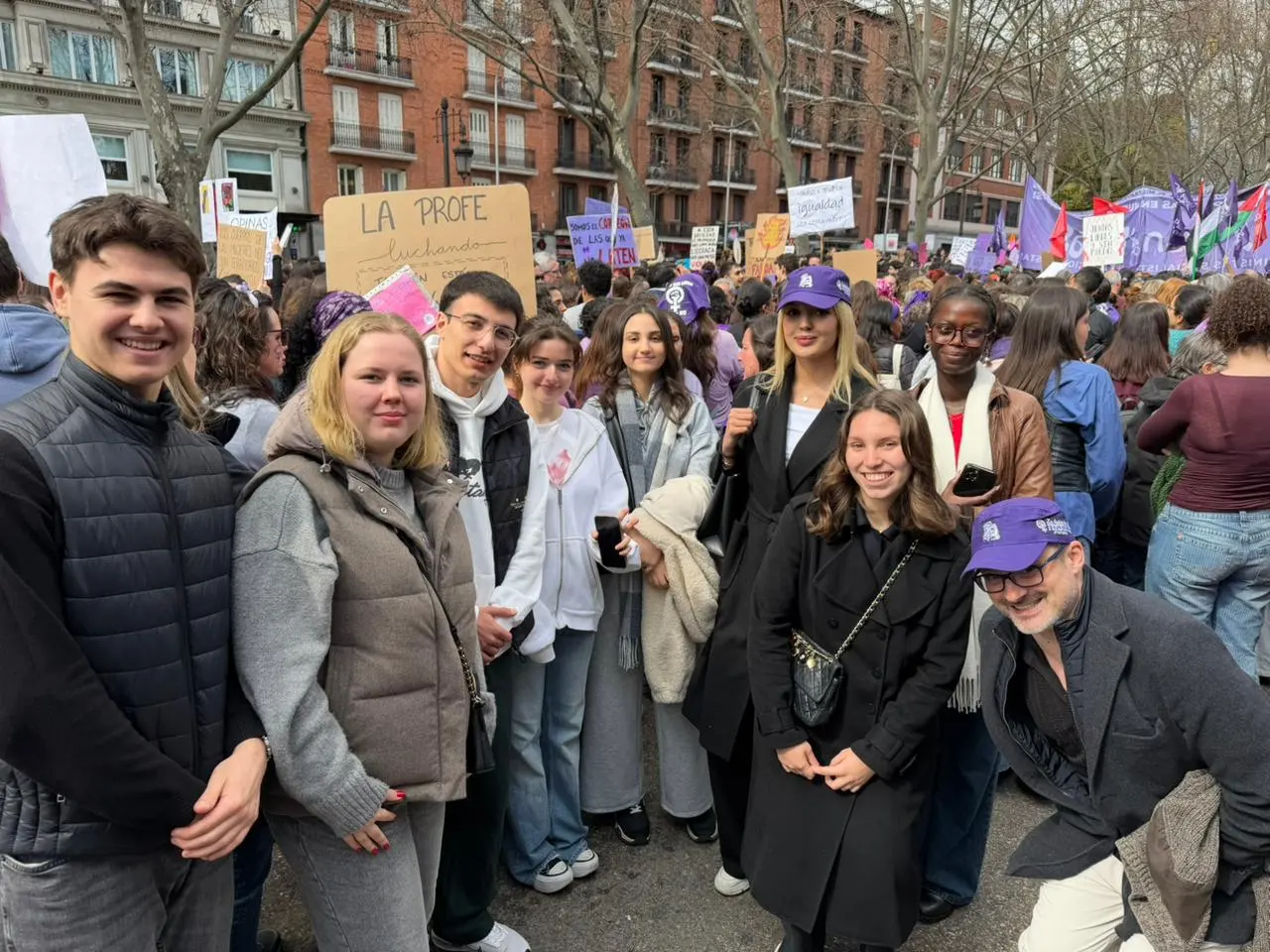
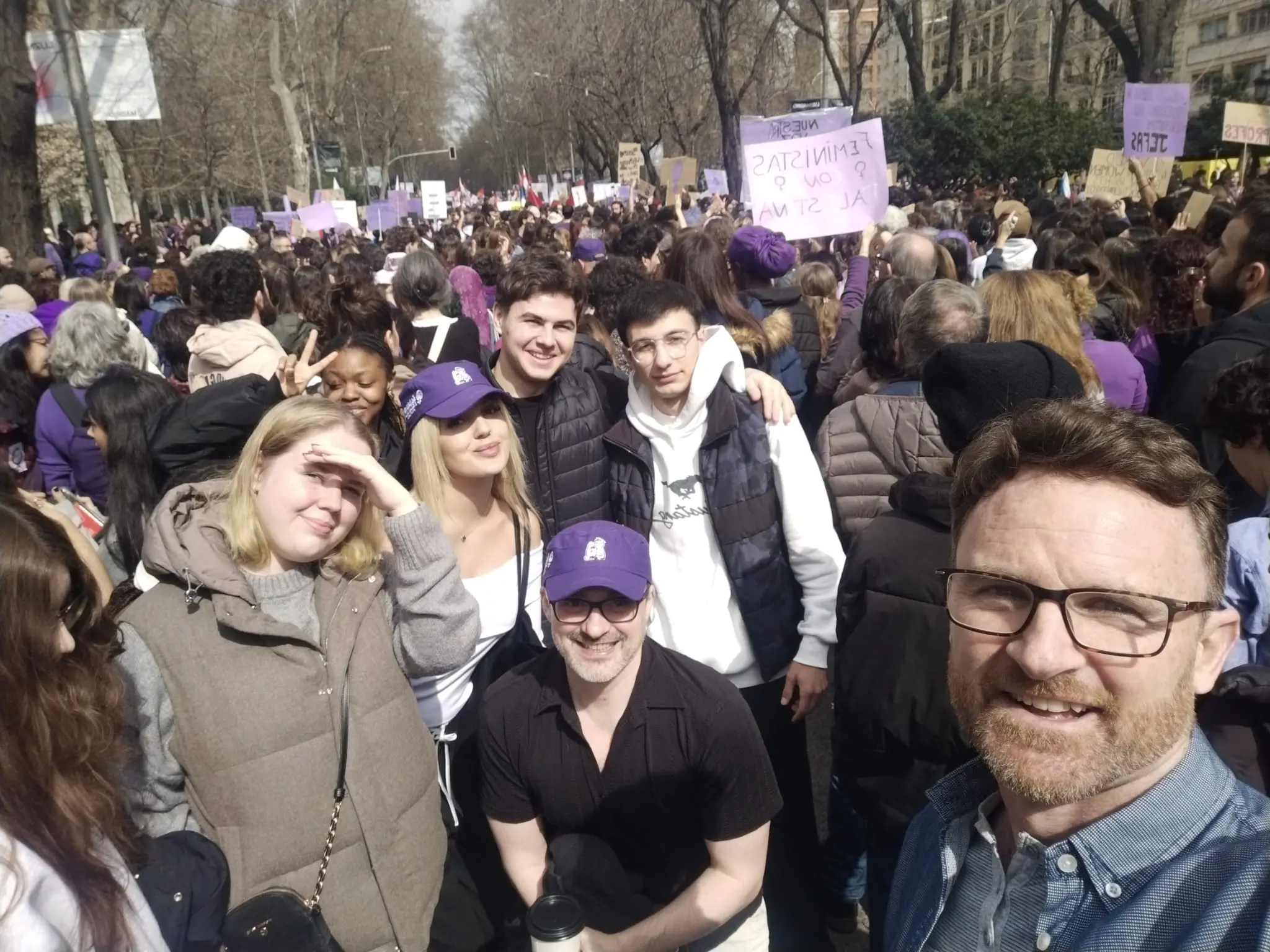
Experiential learning also took students beyond the classroom and into the city itself. On March 8, some students joined the demonstrations marking International Women's Day, widely known in Spain as 8M, to observe civic participation and social movements firsthand.
Many of the students conducting research on women’s equality and women in leadership positions used the event as an opportunity to observe how advocacy movements mobilize support and raise awareness around gender equality.
Madrid as a Living Classroom
According to Professor Coyne, Schiller’s location in the heart of Madrid makes these learning experiences particularly meaningful.
“Our campus is located right in the city center, which makes it incredibly easy for students to engage with what’s happening in the city,” he says. “Events like the 8M march allow them to see politics and activism unfolding in real time.”
By combining primary research, interviews with activists, and participation in civic events, Schiller students are developing a deeper understanding of how political ideas are debated, advocated for, and transformed into action.
These experiences not only strengthen academic learning but also encourage students to become more engaged global citizens.





Discover Our Campuses
Our BA in International Relations and Diplomacy is available online and at the following campuses: