Request information
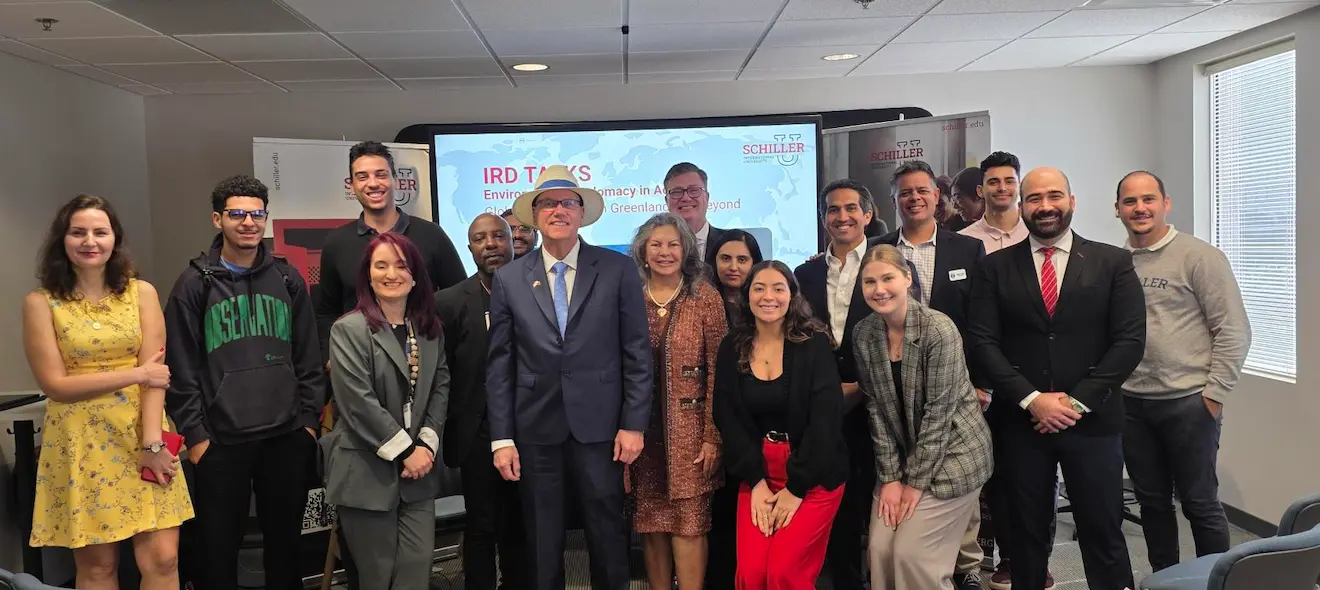
Environmental Diplomacy in Action: Lessons from Greenland and Beyond — A Conversation with Ambassador Tom Armbruster
Schiller International University Tampa campus had the privilege of welcoming Tom Armbruster, former United States Ambassador to the Marshall Islands, for a powerful session on Environmental Diplomacy: Lessons from Greenland and Beyond. Students from all campuses joined the conversation in streaming, turning the event into a truly global classroom experience.
At Schiller, we emphasize global perspective, experiential learning, multilingualism, and real-world engagement. Our guest embodied all of these values. Throughout his distinguished career at the U.S. State Department, Ambassador Armbruster has worked on the establishment of the Arctic Council, nuclear security cooperation with Russia in the 1990s, climate and nuclear legacy issues in the Marshall Islands, and international environmental agreements. His professional journey demonstrates that environmental diplomacy is not abstract — it is negotiated, personal, and consequential.
After the session, we had the opportunity to interview him.
A Conversation on Environmental Diplomacy
What does environmental diplomacy consist of, and what role can it play in the current context of global confrontation?
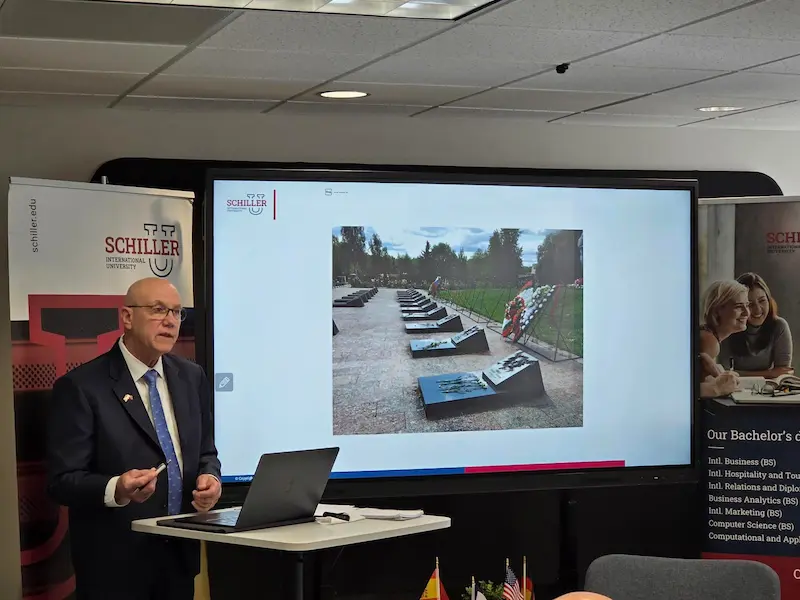 My definition of environmental diplomacy is international agreements and engagements that improve the health of the planet and benefit humans and animals. Today and for future generations. Great examples of environmental diplomacy include the Paris Climate Agreement, the Montreal Protocol that successfully saved the ozone layer, and the Antarctic Treaty, that preserved a whole continent for scientific research.
Conflict and environment are inseparable. The human toll in Ukraine is devastating and heartbreaking. The legacy of the war will also be profound in terms of deforestation, air and water pollution, habitat and biodiversity loss. The emissions alone are equal to something like the output of 175 countries. We rightly prioritize human life, but we often forget the consequences of conflict for plants and animals. We often think of conflict and the environment as totally separate realms. We are still paying for damage from World War Two due to sunken battleships that continue to leak oil, land mines that injure people and animals, and landscapes forever changed by the war.
From that perspective, resolving war and conflicts is at the top of the environmental agenda.
Many believe that environmental protection and climate change mitigation are losing priority on the international agenda. What is your view?
The United States is in a position to lead on this issue given the scientific and technical expertise. This administration has chosen to retreat from that leadership role and that impedes the momentum for change. But the trend is still towards a sustainable future. It just seems painfully slow.
One way we measure progress is through the United Nations Sustainable Development Goals (SDGs). By that standard we have been underachieving for some time. None of the 17 SDGs are on track for the 2030 target date. Goals include clean water, affordable and clean energy, sustainable cities, and protecting marine and terrestrial life. The challenge is vast and the solutions have to come not just from policymakers, but teachers, innovators, poets, engineers, and scientists.
I do have faith in the younger generation. They understand what is at stake and are taking action.
Legendary primatologist and conservation hero Jane Goodall said:
Hope is often misunderstood. People tend to think that it is simply passive wishful thinking: I hope something will happen but I’m not going to do anything about it. This is indeed the opposite of real hope, which requires action and engagement. I do have reasons for hope: our clever brains, the resilience of nature, the indomitable human spirit, and above all, the commitment of young people when they’re empowered to take action.
Beyond its high geostrategic value and natural resources, the Arctic plays a fundamental role in the planet’s climate system. What can we do to preserve it?
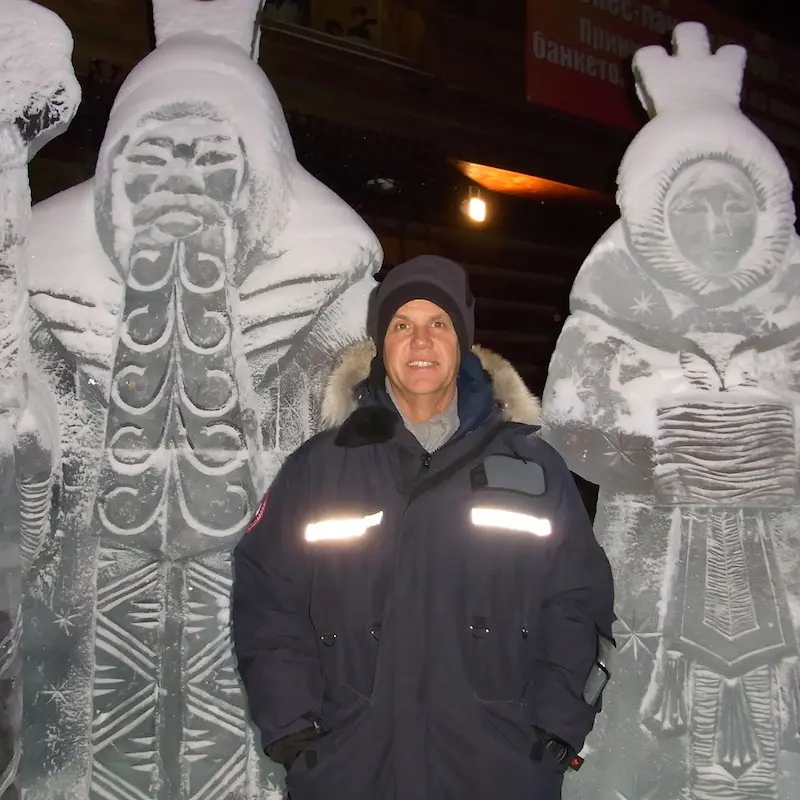 There are a lot of geoengineering solutions proposed including stratospheric aerosol injection, blocking sunlight, and spraying seawater into clouds among others. I’m not a scientist and can’t weigh the merits of these ideas, but I am glad scientists are thinking about this important question.
The more hopeful outcome would be not to have to resort to these strategies and to reduce emissions enough to avoid some of the worst outcomes of climate change.
We know low lying coastal communities, farmers, and wildlife are hurting due to climate change. Why not take as much action now as we can? When your tooth hurts, you go to the dentist! We should prevent more pain by accelerating the transition to green energy, reducing our carbon footprints, and restoring balance.
The Arctic Council is a powerful body made up of indigenous leaders and all eight Arctic countries. The Council focuses on all of these questions and deserves the support of governments and participation by NGOs. The Arctic Council does not take on military security, so it really is all about sustainability and finding solutions.
The Greenland debate started by the Trump Administration is not as central to the Arctic’s future as the environmental questions, but maybe it brought some more attention to the region.
Do you think that a model based on renewable energy would prevent the current struggle for access to fossil fuels?
The world is a huge arena for competition. Competition for energy, ideas, influence, even territory. So, no, I think competition and struggle are inherent to humans. But in this case, you can see who the good guys and bad guys are. The good guys are working towards a future that gives everyone possibilities, and the bad guys are not looking far enough into the future, they are simply looking to enrich themselves in the short term. We need a new outlook. That is why education is so important.
I had an environment class in 8th grade and went out on the water with fishermen. That opened my eyes to the richness of nature and how it can sustain us if we treat nature with respect. I hope every student can have an opportunity to connect with nature, in a forest, a coral reef, or jungle. Once you are connected to nature, you become an advocate for life.
There is a lot going on from fission energy and modular nuclear reactors to ocean thermal energy and solar and wind energy. We will eventually run on clean energy, but I hope we will not have used up every drop of oil in the interim.
In light of the limited results of recent climate summits, some suggest seeking alternative frameworks to reach more far-reaching agreements. Do you think the era of the COPs has come to an end?
One thing humans really do well is form communities. One of my neighbors who is in her 80’s went to every COP until the last one. She remembers how small it was and how it has grown to include so many NGOs, policymakers, scientists, and protestors. It’s healthy and it seems that COP is here to stay. But if far-reaching agreements can be achieved through other means I’m all for it. Multilateral diplomacy is hard. Think of how hard it is to agree on where to go for dinner when you have more than 2 couples. As I said, there is an ongoing competition for ideas and influence everywhere all the time.
We have proven that it can be done though. The Montreal Protocol was universally adopted and reduced global greenhouse emissions by 135 billion tons and prevented over 280 million cases of skin cancer. That’s a real victory.
What will never come to an end is human innovation and adaptation. We’ll find ways to make life better and give the next generation their chance. We just have to keep fighting.
The Value of Bringing Real-World Diplomacy into the Classroom
Bringing practitioners like Ambassador Armbruster into our classrooms bridges theory and reality. Environmental diplomacy is not just a concept discussed in textbooks — it is shaped by negotiations, trade-offs, political will, and human relationships. Hearing directly from someone who has sat at the table of international negotiations allows our students to grasp the complexity, urgency, and possibility embedded in global governance.
At Schiller, we believe that education must go beyond knowledge transmission. It must connect students with those who have shaped the world they are now preparing to lead. Experiences like this empower our students to see themselves not only as observers of global challenges, but as future diplomats, policymakers, innovators, and advocates capable of shaping sustainable solutions for generations to come.
This interview article was originally published at Forbes Spain on Feb 27, 2026.





Discover Our Campuses
Our BA in International Relations and Diplomacy is available online and at the following campuses: